
National Databases of Critical Metals in Waste
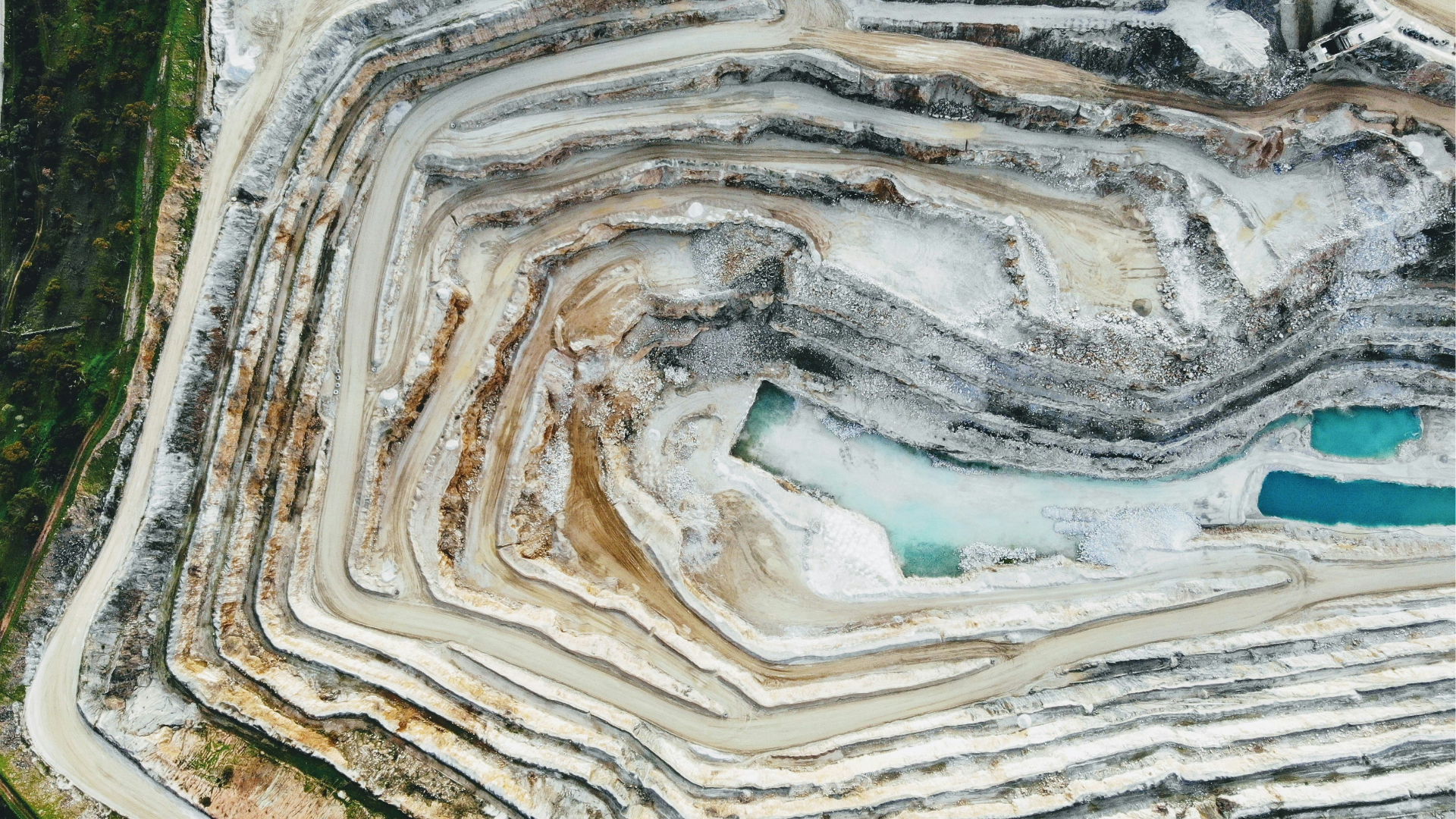
Drone over quarry in Barossa Valley, SA, Australia. Image: Dion Beetson
This project was developed by the Sustainable Minerals Institute (SMI) at the University of Queensland to overcome the challenge of inconsistent and non-standardised data relating to critical minerals and mine tailings.
Overview
Led by Associate Professor Steven Micklethwaite and Prof Anita Parbhakar-Fox from the Sustainable Minerals Institute (SMI), the ‘National Databases of Critical Metals in Waste’ project aimed to develop fundamental and applied research on critical metal and mineral systems.
Specifically, the objectives of the project were:
Expand and refine a national database of critical metals in whole rock/ore/mine waste samples referencing national and international standards.
Create a Critical Minerals database prototype that captures geochemical and petrophysical mineral properties per national and international standards.
Deliver sample analyses through Geoscience Australia’s (GA) ‘OzChem’ platform and SMI portals.
Scope linkages for future integration with AuScope’s Earth Bank (formerly known as AusGeochem) relational databases.
The Challenge
Australia’s supply of base and earth metals is signifigant. Still, many critical minerals (e.g., cobalt, indium, tungsten, gallium, and germanium) have primarily been by-products of mining for other commodities. Furthermore, consistent and standardised data presentation on critical metals is only just beginning to emerge.
This project aimed to develop and streamline a critical metal and minerals database system that would help document resource inventory and environmental risk factors of primary, secondary, and mine waste sources. This will enable the development of new sustainable processing technologies to support Australia’s National Circular Economy strategies.
Outcomes
Delivered functional prototype critical metals databases, served through Geoscience Australia and Sustainable Minerals Institute portals.
Delivered scoping document on the incorporation of research-grade critical metals and critical minerals data into relational databases of ‘Earth Bank’ (formerly known as AusGeochem).
Delivered scoping document on the expansion of the critical metals database to incorporate weathering and landscape evolution robustly.
Delivered supply of new critical metal/whole rock sample analyses.
Supported Australian Government policy outlined in the National Resources Statement and the Critical Minerals Strategy 2022 through the ‘Exploring for the Future’ program and the ‘Virtual Critical Minerals Research Centre’.
Who will benefit?
This project has helped researchers, policymakers, industry, and the general public with an interest in maximising the value of mining projects at the end of their life for all communities, including Indigenous communities and their respective supply chain. Specifically, the database has helped researchers build innovative models for sustainable resource development, improve exploration techniques, and conduct decarbonisation research. This has enabled informed policymaking on environmental standards and critical mineral strategies, including assisting industry in optimising resource extraction processes.
Access
Data Access: Data from this project is currently available through:
Geoscience Australia’s OzChem database
Geoscience Australia’s Critical Minerals Mapping Initiative
AuScope’s Earth Bank database.
Project Name
National Databases of Critical Metals in Waste
Project Lead


Timeframe
2022 to 2023
Status
Completed
Funding
RIIP22
Host
University of Queensland
Other Collaborators
Geoscience Australia
RMIT
AuScope Programs
Research Data Systems
Acknowledging AuScope
This project was made possible by support from the National Collaborative Research Infrastructure Strategy (NCRIS) through AuScope. Acknowledging AuScope and NCRIS helps us demonstrate the value of shared research infrastructure, ensuring continued support and resources for the research community.
If you helped deliver this project or have benefited from its outputs, please credit AuScope so we can include your work in our impact reporting. For examples of acknowledgment, please visit our ‘How to Acknowledge AuScope’ page.
We’d love to see your work—please tag us on social media using:
@auscope | #AuScopeImpact | #NCRISimpact