
Offshore Fibre Sensing Infrastructure for Geohazards, Energy Transition, and Multidomain Marine Research
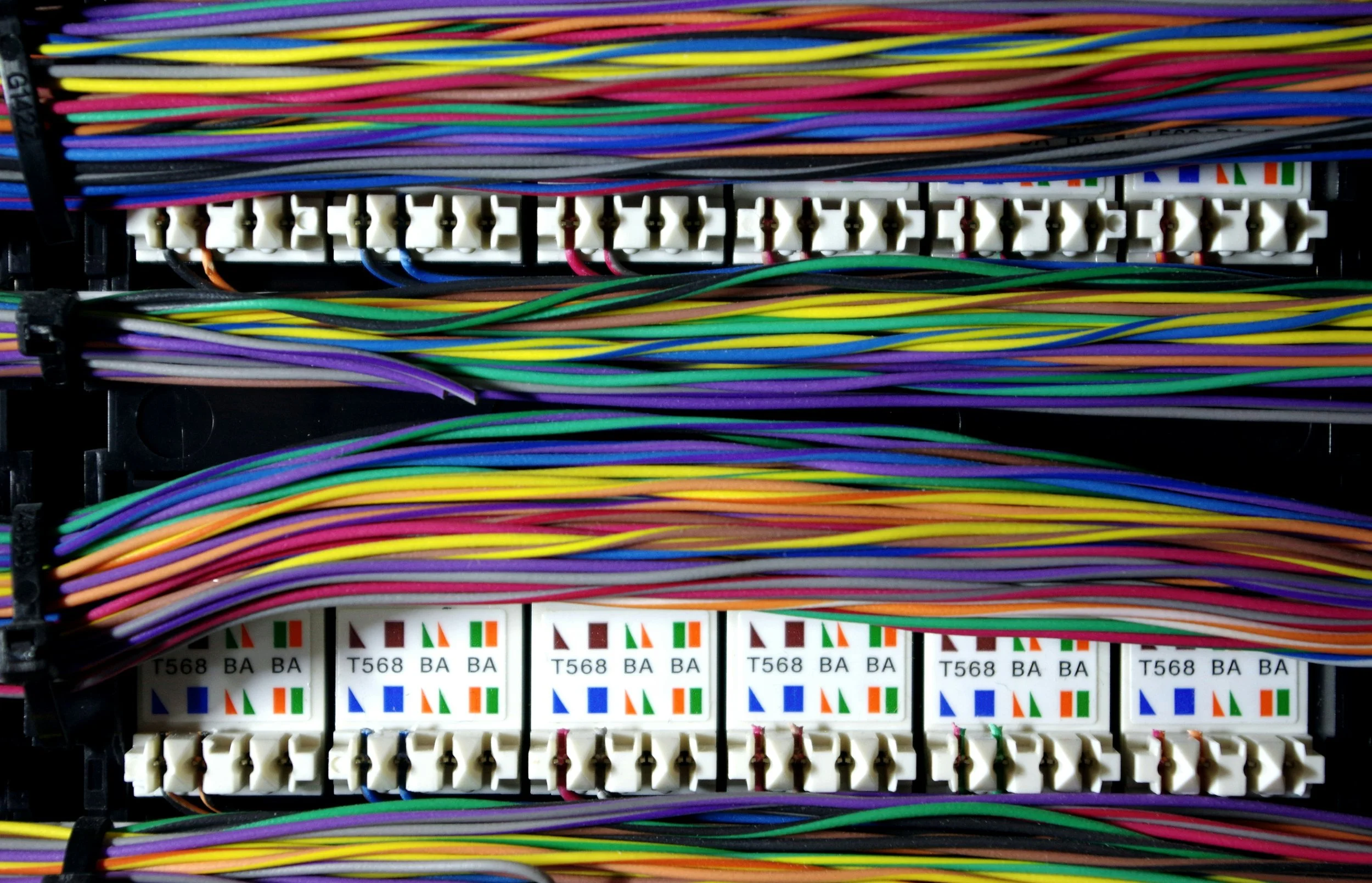
Network Panel. Image: Lee Lawson
This project establishes Australia’s first national offshore Distributed Acoustic Sensing (DAS) capability by commissioning a long‑range interrogator system that transforms existing submarine telecommunication cables into real‑time seismic and acoustic sensor arrays.
Overview
Led by Dr Erdinc Saygin (CSIRO) with project management by Dr Asrar Talukder (CSIRO), the project will procure, commission, and deploy a long‑range (>100 km) DAS interrogator system. The team will conduct onshore and offshore field trials, develop national access and operational procedures, and establish a multidisciplinary community of practice spanning universities, government agencies, and industry.
The system will enable continuous monitoring of offshore geohazards, marine processes, and emerging energy‑transition infrastructure, supporting national resilience, environmental stewardship, and Australia’s transition to net‑zero emissions. It will also be hosted at CSIRO’s Kensington campus and made available for national research, training, and collaborative projects.
“Thousands of kilometres of submarine fibre-optic cables already cross Australia's seafloor — this project unlocks them as a national scientific instrument. As offshore energy infrastructure expands, from CCS to offshore wind, we need a permanent, real-time sensing capability to underpin both our resilience to geohazards and Australia's transition to net zero, and this project will help deliver it.”
- Dr Erdinc Saygin & Dr Asrar Talukder
The Challenge
Australia has no dedicated offshore sensing infrastructure available for national access that is capable of detecting small‑magnitude earthquakes, submarine landslides, seabed instability, or environmental acoustic signals across its vast marine jurisdiction. Existing land‑based stations are too distant to monitor offshore hazards, and traditional marine seismic surveys are costly, infrequent, and environmentally intrusive.
As offshore Carbon Capture Storage (CCS), hydrogen storage, renewable energy export cables, and subsea infrastructure expand rapidly, the absence of real‑time monitoring exposes critical assets to unmanaged geohazard risk. This project fills that gap with a scalable, low‑impact, fibre‑based sensing platform.
Expected Outcomes
A fully commissioned long‑range offshore DAS system hosted at CSIRO and available for national access.
Onshore and offshore field trials demonstrating capability for geohazard detection, CCS monitoring, oceanographic sensing, and infrastructure surveillance.
National operational procedures, training materials, and FAIR‑aligned data‑sharing frameworks.
A multidisciplinary community of practice connecting researchers, government agencies, and industry.
Open‑access datasets and technical learnings that de‑risk future deployments and support broader adoption of DAS technology.
What are the benefits?
Enhanced Research Capabilities: New research infrastructure will enhance geoscience, oceanography, marine biology, climatology, and environmental monitoring. This includes serving as an alternative to conventional marine seismic surveys, thereby reducing the environmental footprint.
Support Australia’s Energy Transition: commissioning of next‑generation sensing technologies aligns with national net-zero priorities across CCS, hydrogen storage and offshore wind power, enhancing national infrastructure resilience.
Greater Cross-Discipline Collaboration: Leveraging embedded infrastructure fosters greater collaboration between research, government and industry bodies.
Who will benefit
Several communities will benefit from this project, including:
Universities and research institutions working in seismology, oceanography, marine geology, engineering, and climate science.
Government agencies, including Geoscience Australia, the Australian Antarctic Division (AAD), the Australian Fisheries Management Authority (AFMA), and Parks Australia.
Energy and resources industries, particularly CCS operators, hydrogen hubs, offshore wind developers, and subsea cable operators.
Environmental and conservation organisations that are monitoring marine ecosystems, vessel activity, and noise pollution.
Infrastructure planners and regulators require geohazard and seabed stability information.
International collaborators through shared datasets and global DAS research networks.
Access
More information to be provided by the project team as the project develops.
Project Name
Offshore Fibre Sensing Infrastructure
Project Lead
Dr Erdinc Saygin
Dr Asrar Talukder
Timeframe
Jan 2026 to Jun 2027
Status
Active
Funding
Pilot 5
Host
CSIRO
Other Collaborators
Australian National University (ANU)
AARNet
AuScope Programs
Acknowledging AuScope
This project was made possible by support from the National Collaborative Research Infrastructure Strategy (NCRIS) through AuScope. Acknowledging AuScope and NCRIS helps us demonstrate the value of shared research infrastructure, ensuring continued support and resources for the research community.
If you helped deliver this project or have benefited from its outputs, please credit AuScope so we can include your work in our impact reporting. For examples of acknowledgment, please visit our ‘Acknowledge AuScope’ page.
We’d love to see your work—please tag us on social media using:
@auscope | #AuScopeImpact | #NCRISimpact