
Mobile petrophysics
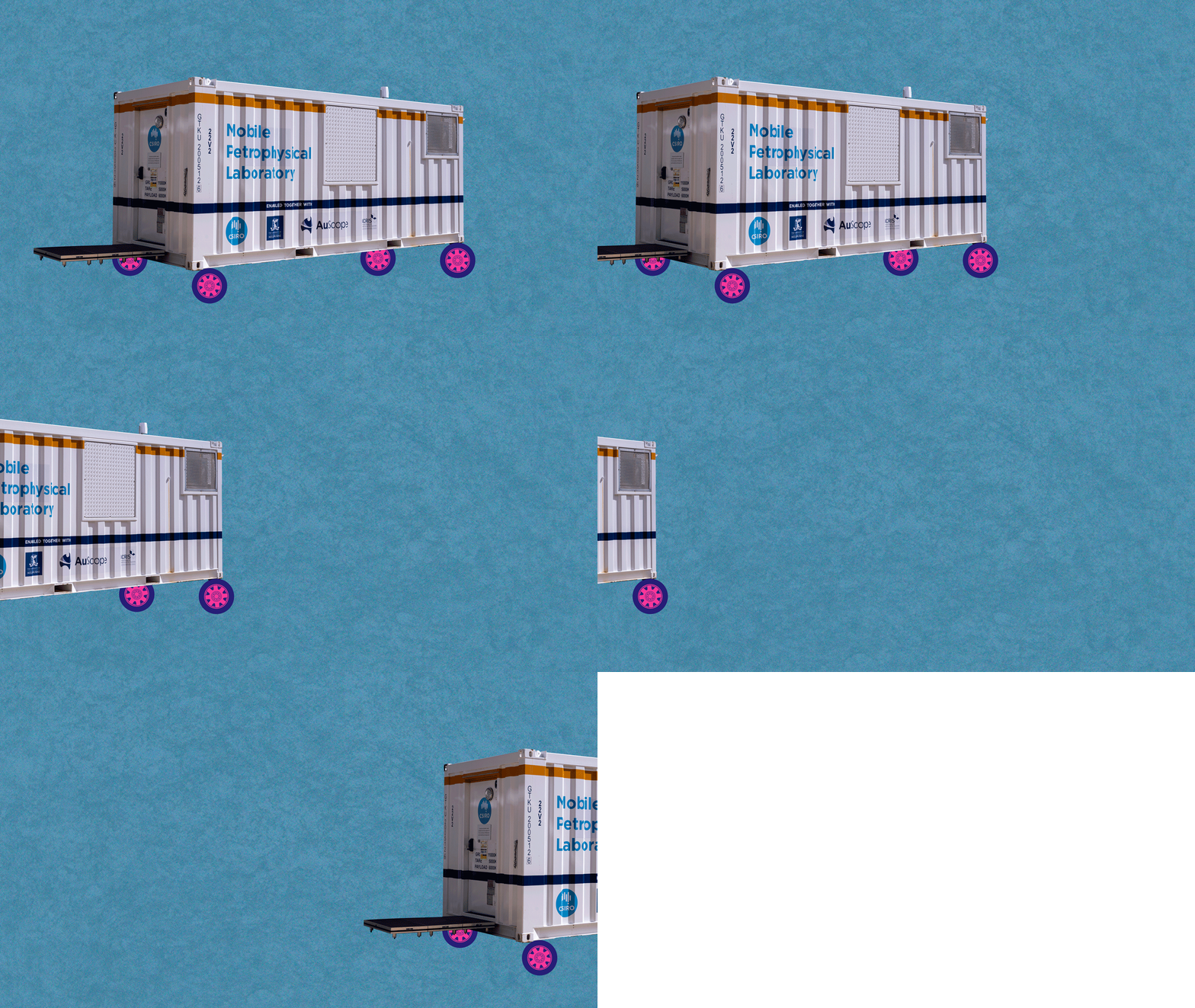
The Mobile Petrophysics Lab, a joint venture by CSIRO and Melbourne University, provides an ‘on-the-go’ petrophysical logging system for government, researchers and industry! Image: AuScope
Mobilising Petrophysics around Australia enhances national engagement and open data delivery of the Mobile Petrophysical Laboratory (MPL), providing a mobile platform for measuring petrophysical properties on core samples.
Overview
Led by Dr Shane Mulè from CSIRO and Dr David Belton from The University of Melbourne, this two-year project enables the MPL and is developing an open and free online data delivery system integrated into existing AuScope portal infrastructure. The project principally focuses on containerising a multi-scanner core logger (MSCL), enabling it to be transported to core storage and analysis facilities across Australia. It will also conduct national workshops to engage the community on the lab's technical, logistical, and application aspects.
The Challenge
Accessing and sharing petrophysical data collected on core samples is currently fragmented, hindering collaboration and the utilisation of this valuable geological information.
The Mobile Petrophysical Laboratory (MPL) aims to provide a stable and reliable platform for measuring co-located petrophysical properties on sample cores from across the country.
The Outcomes
Delivery of a containerised multi-scanner core logger instrument for use across geological surveys, industry and universities. This has massively increased the amount of petrophysical data being collected, reducing costs and environmental impact (associated with transporting core or rock samples).
Development and integration of an open and free online data delivery system into the existing AuScope portal infrastructure, featuring petrophysical data analytics and query features. This has allowed constrained geophysical models, turning data imagery into actionable insights.
Delivery of national workshops and training materials to engage and educate the geoscience community on MPL technical and logistical aspects. This has allowed enhanced collaboration and data sharing among government, academic, and industry users.
Primary Intended Users
Government agencies, academic researchers, and industry professionals involved in geological research and exploration will benefit from improved access to petrophysical data and enhanced collaboration opportunities.
Access
MSCL: Access to the containerised multi-scanner core logger is available to any organisation holding core samples requiring analysis and is managed by the NVCL access committee via Shane Mule.
Data Access: MPL outputs acquired by government and researchers for non-commercial purposes will be made publicly and freely available to all via the AuScope portal.
Tools and Software Access: Software developed for the AuScope portal will be made publicly available through the AuScope GitHub repository.
Workshops and Training: Workshop and training material will be made publicly available through CSIRO publication services.
Project Name
Mobile petrophysics
Project Lead

Timeframe
2021 to 2023
Status
Complete
Funding
AuScope Pilots 2
Hosts
CSIRO
The University of Melbourne
NCRIS Collaborators
Australian Research Data Commons (ARDC)
Other Collaborators
MinEx CRC
AuScope Programs
Acknowledging AuScope
This project was made possible by support from the National Collaborative Research Infrastructure Strategy (NCRIS) through AuScope. Acknowledging AuScope and NCRIS helps us demonstrate the value of shared research infrastructure, ensuring continued support and resources for the research community.
If you helped deliver this project or have benefited from its outputs, please credit AuScope so we can include your work in our impact reporting. For examples of acknowledgment, please visit our ‘How to Acknowledge AuScope’ page.
We’d love to see your work—please tag us on social media using:
@auscope | #AuScopeImpact | #NCRISimpact