
From asteroids to ore: Australia’s new atom probe is ready for research
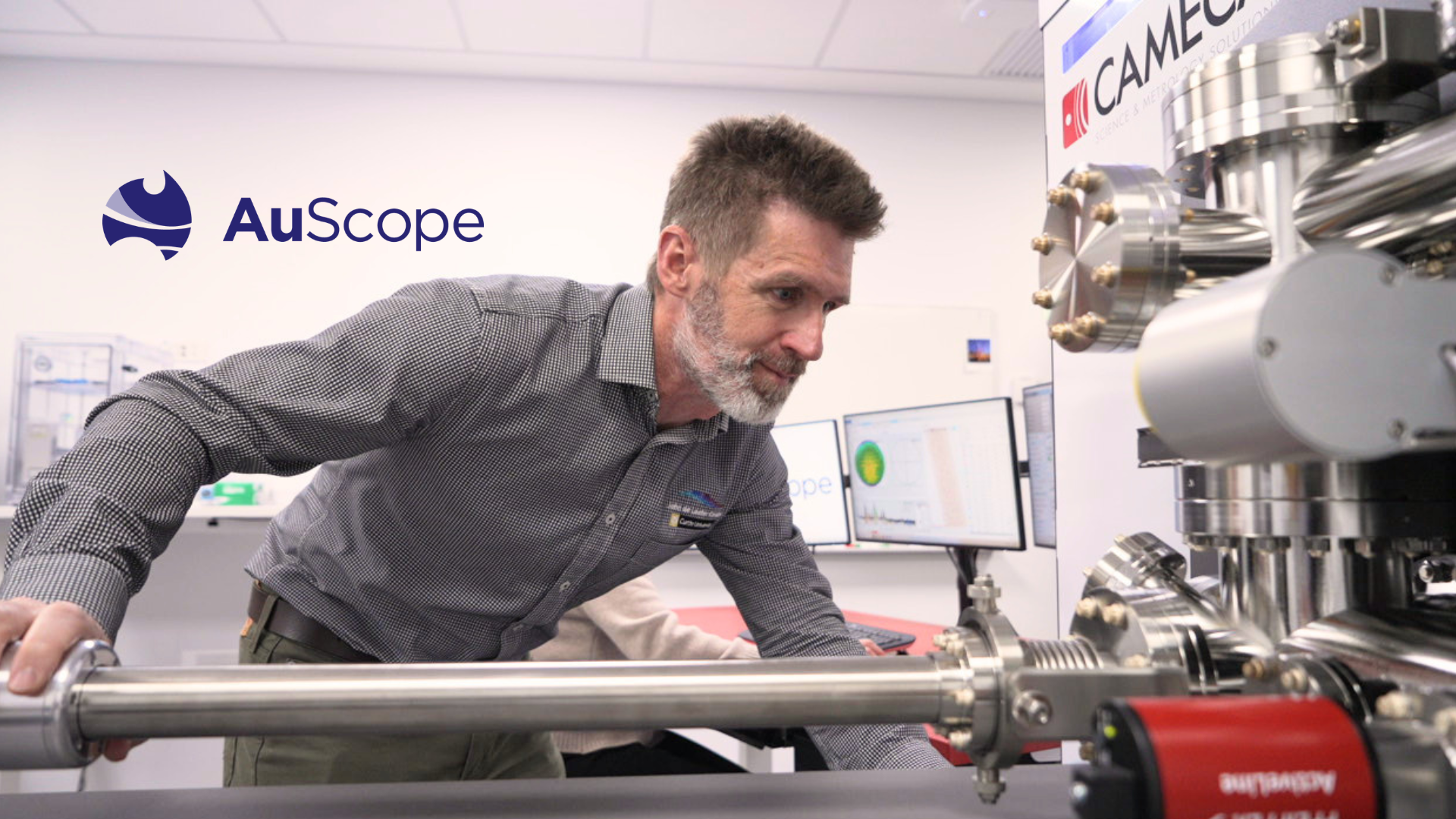
A/Prof David Saxey operating the new atom probe at Curtin University.
From asteroids to ore: Australia’s new atom probe is ready for research
Some of the biggest questions about our planet are answered by its smallest pieces. A single crystal, smaller than a grain of sand, can reveal when a continent formed, what happened when an asteroid struck, or where precious metals lie hidden in rock.
A new instrument supported by AuScope at Curtin University can now read those stories one atom at a time. The CAMECA LEAP 6000 XR Geoscience Atom Probe builds 3D maps of minerals, showing exactly which elements are present and where they are located. It was officially launched at the John de Laeter Centre in Perth on 9 November 2026, replacing the facility’s 2015 model.
AuScope’s CEO, Dr Tim Rawling, said the atom probe was a $5 million investment in Australia's research future, and the only one in the country dedicated to geoscience. AuScope contributed $1.6 million through the National Collaborative Research Infrastructure Strategy (NCRIS), along with funding from the Western Australian Government and Curtin University.
“AuScope invested in this important research infrastructure because it keeps Australia at the forefront of geoscience. Together with Curtin University and the Western Australian Government, we’re giving researchers, government and industry access to world-class technology that helps them better understand our planet and its resources,” said Dr Tim Rawling.
World-class geoscience research down under
Atom probes are highly specialised, and only a handful worldwide focus on geoscience. Having one here means Australian researchers can:
• Run cutting-edge analyses at home, rather than competing for time in an overseas lab
• Keep samples, data and expertise in Australia
• Train students and emerging researchers to operate advanced instruments, building Australia’s specialist workforce.
As national research infrastructure, the atom probe is available to researchers, government and industry across Australia, and linked to international partners through the EXCITE research network.
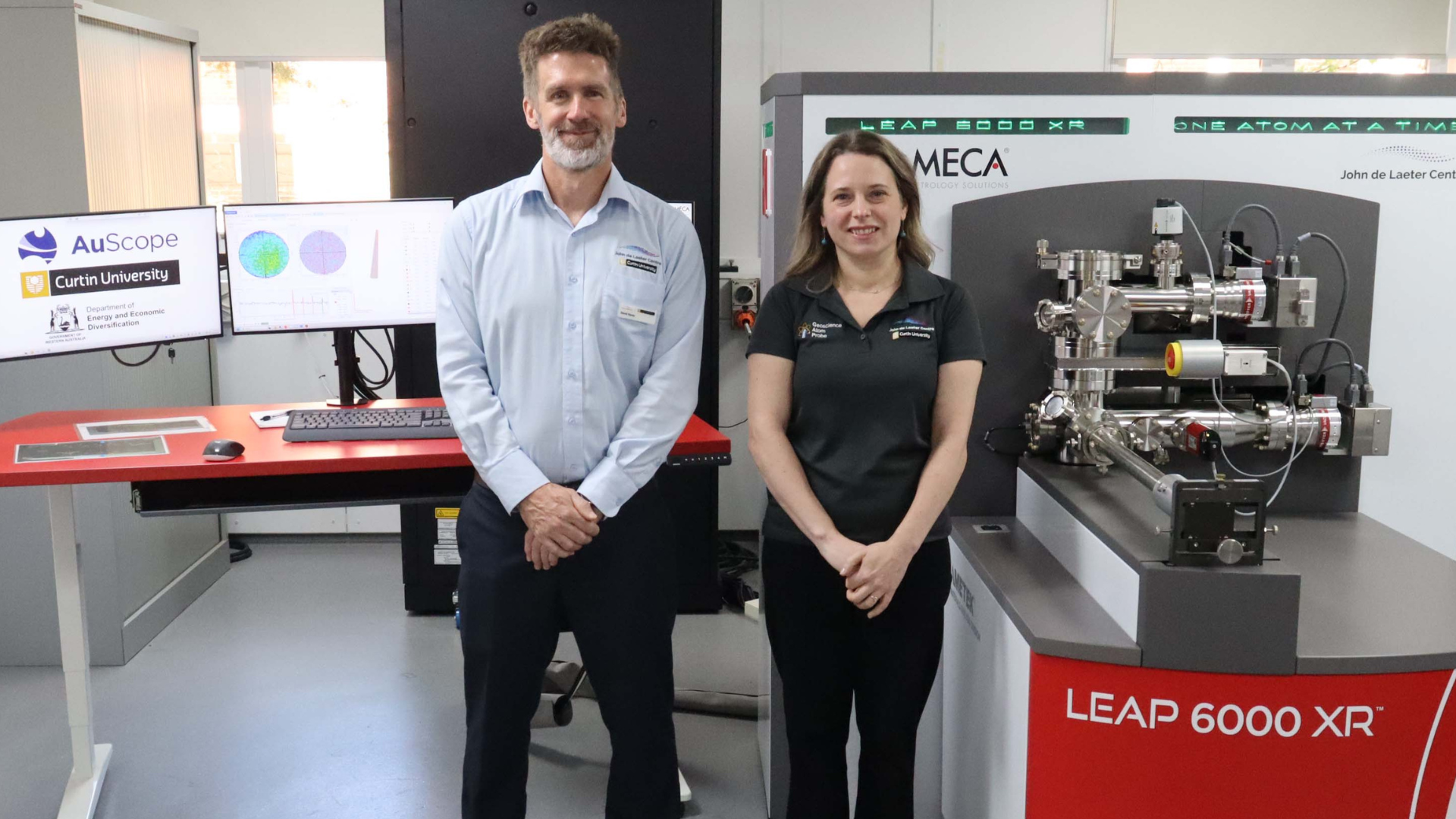
Geoscience Atom Probe Facility Leader A/Prof David Saxey and Laura Petrella with the new atom probe.
What the atom probe can reveal
A/Prof David Saxey, Facility Leader at Curtin University’s Geoscience Atom Probe Facility, said the atom probe can reveal not just what minerals contain, but where elements sit and how they have moved over geological time.
“Often the most important clues in a rock are too small for other techniques to see. Our new atom probe shows them in 3D, and works on samples that were too difficult for our previous instrument,” said A/Prof Saxey.
Researchers will use the atom probe to:
• Uncover Earth’s history by studying tiny crystals that reveal the age of rocks
• Explore how our solar system formed by studying asteroid samples returned by NASA and JAXA missions
• Study volcanic materials to help scientists better understand eruptions and their hazards
• Help Australia’s resources industry to find valuable minerals by revealing clues about where and how deposits formed.
Backing a future made in Australia
Some of the critical minerals Australia needs, such as germanium and indium, are locked in lower-value minerals, making them hard to recover. The atom probe can reveal how they are held within ores, opening the door to more efficient processing with less environmental impact.
This work supports the Australian Government’s Critical Minerals Strategy and Future Made in Australia agenda, which aim to process more of these minerals onshore. Doing this research here, rather than overseas, also builds the sovereign capability behind the National Science and Research Priorities of a secure and resilient nation.
The atom probe can also analyse alloys and corrosion, supporting innovation in materials engineering and manufacturing. It is the first instrument purchased through AuScope’s EarthBank program, a platform for analysing and sharing geochemistry data from laboratories worldwide.
The atom probe’s official launch at the John de Laeter Centre, Curtin University on 9 November 2026, was attended by US Consul General Colleen Altstock, senior Curtin University staff and AuScope representatives.
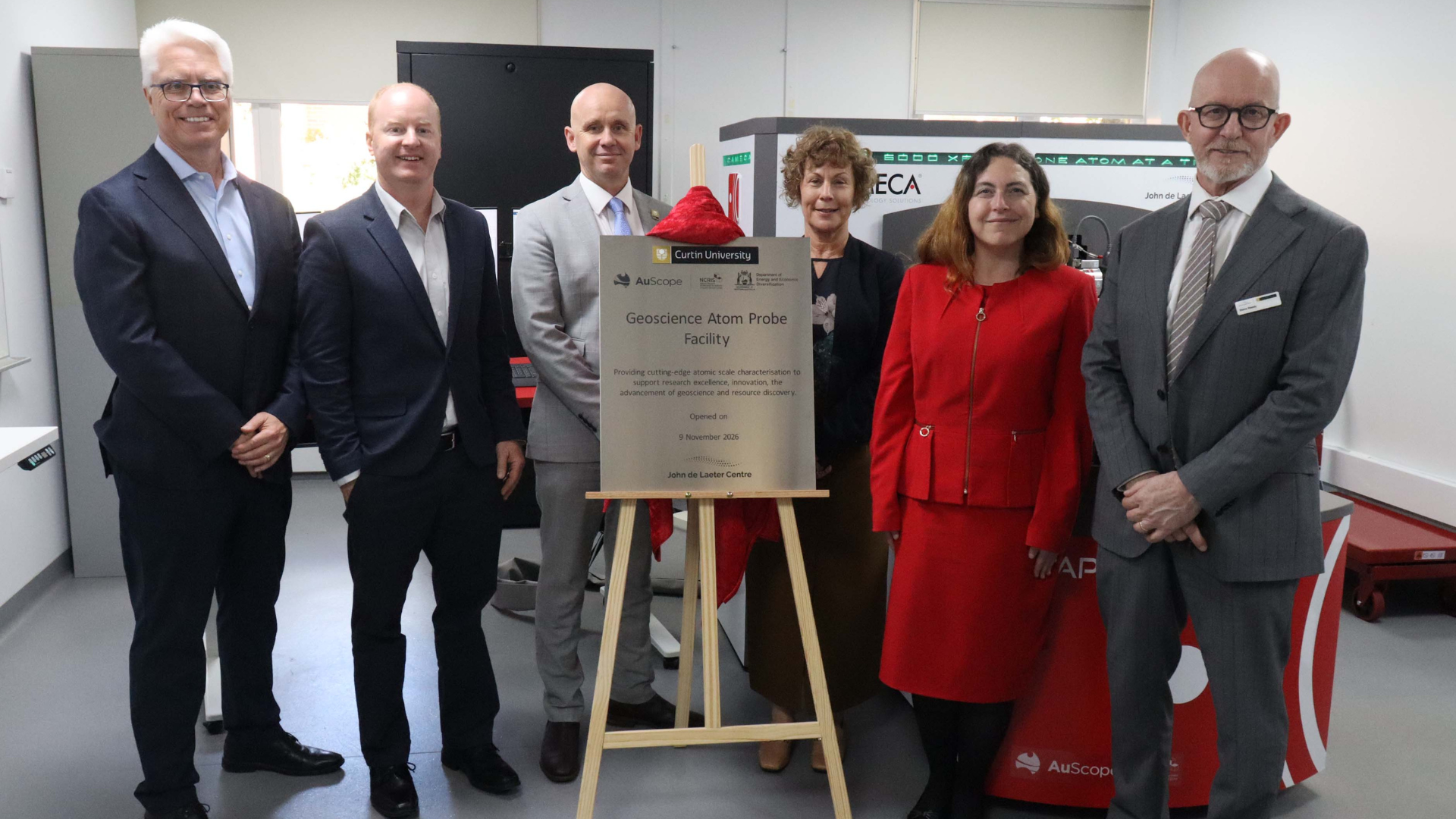
L-R: AuScope Earthbank Project Director Prof Brent McInnes, John de Laeter Centre Director Prof Will Rickard, Curtin University Science and Engineering Faculty Pro Vice-Chancellor Prof Chris Rawson, Curtin University Deputy Vice Chancellor Research Prof Lindy Fitzgerald, US Consul General Colleen Altstock and Deputy Pro Vice-Chancellor Science and Engineering Faculty Prof Steven Reddy.
Share our stories


IN A NUTSHELL
Australia now has one of the world’s few atom probes focused on geoscience. Supported by AuScope and hosted at Curtin University, it maps minerals atom by atom, helping answer big questions about Earth’s history, our solar system and the nation’s resources.
FURTHER INFORMATION
Read about AuScope’s critical minerals atom probe project.
CONTRIBUTOR
A/Prof David Saxey, Facility Leader - Geoscience Atom Probe, John de Laeter Centre, Curtin University