Annual Highlights 2025
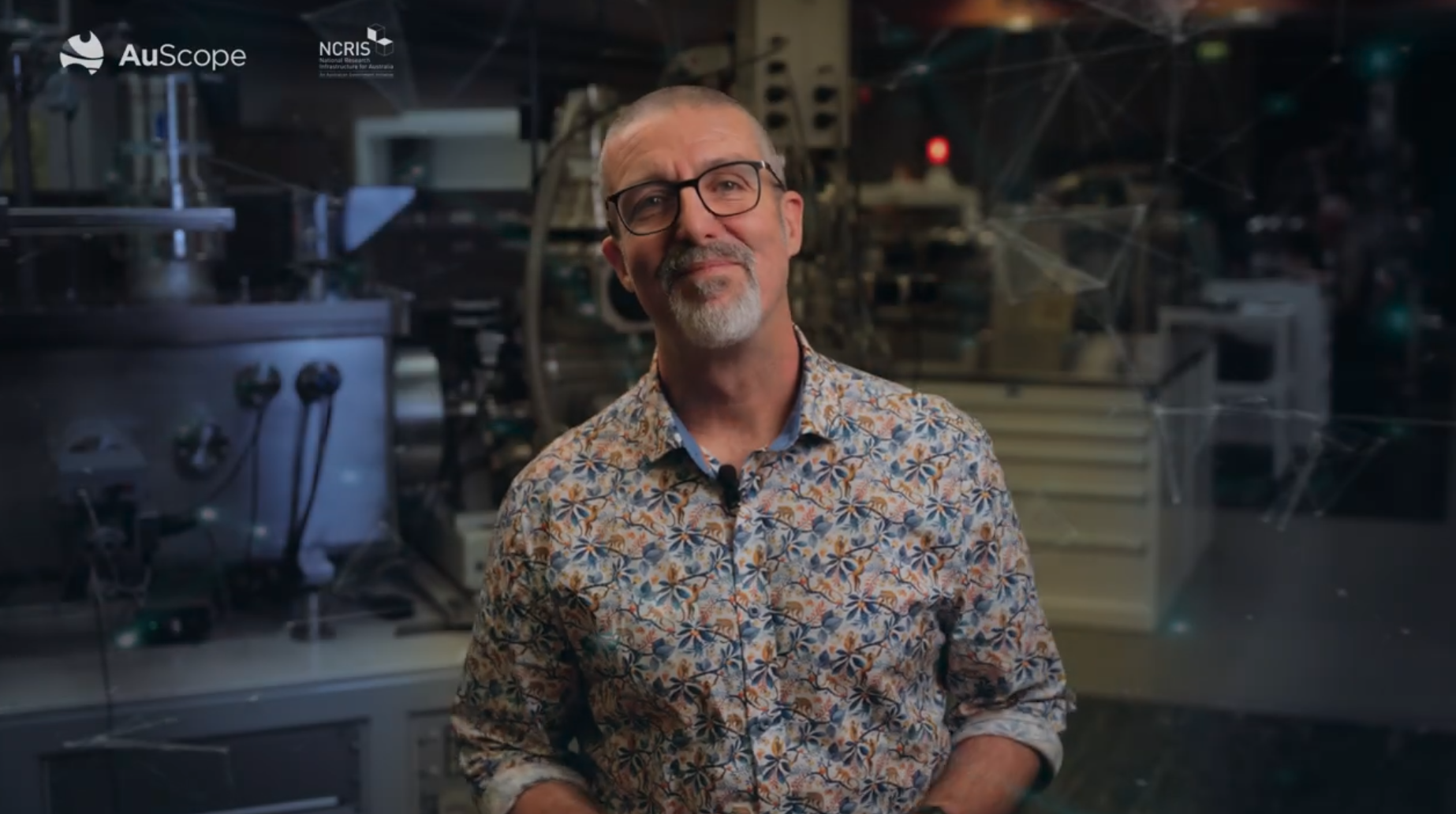
It's been another extraordinary year across AuScope and our national research community. A year of innovation, collaboration, and discovery. From Antarctica to the outback, from classrooms to the deep earth, our people and partners continue to push the boundaries of geoscience for Australia's future. Join us in celebrating the impact and reach of AuScope via our 2025 highlights video and edited transcript below.
Today, I present AuScope’s highlights from the ANU shrimp laboratory on the unseated lands of the Ngunnawal (Ngunawal) and Ngambri peoples. I pay my respects to all First Nation elders, past and present, as the first geoscience scientists around the continent where our team works.
Leadership and Team Changes
We begin with some changes across the AuScope family. We farewell Professor Richard Hillis, who has given many years of dedicated service to our Board. Thank you, Richard. We warmly welcome Professor Anya Reading and Associate Professor Caroline Tiddy as new Board members, bringing fresh expertise and vision to our leadership. At AuScope HQ, we extend a heartfelt thank you to Tanya Down, our Office Manager, for an incredible 17 years—an integral part of the AuScope story. We welcome Nicole Thompson as our new CFO and Dr Sima Mousavi, who continues to lead the AuSIS program while stepping into the new role of National Outreach Manager.
Growing Global Research Partnerships
We are pleased to report the expansion of the MOU between AuScope and the European Plate Observing System (EPOS) to now include EarthScope in the United States and Earth Sciences New Zealand. This partnership strengthens the foundation for a global research infrastructure for the solid earth sciences.
Antarctic & Marine Research Highlights
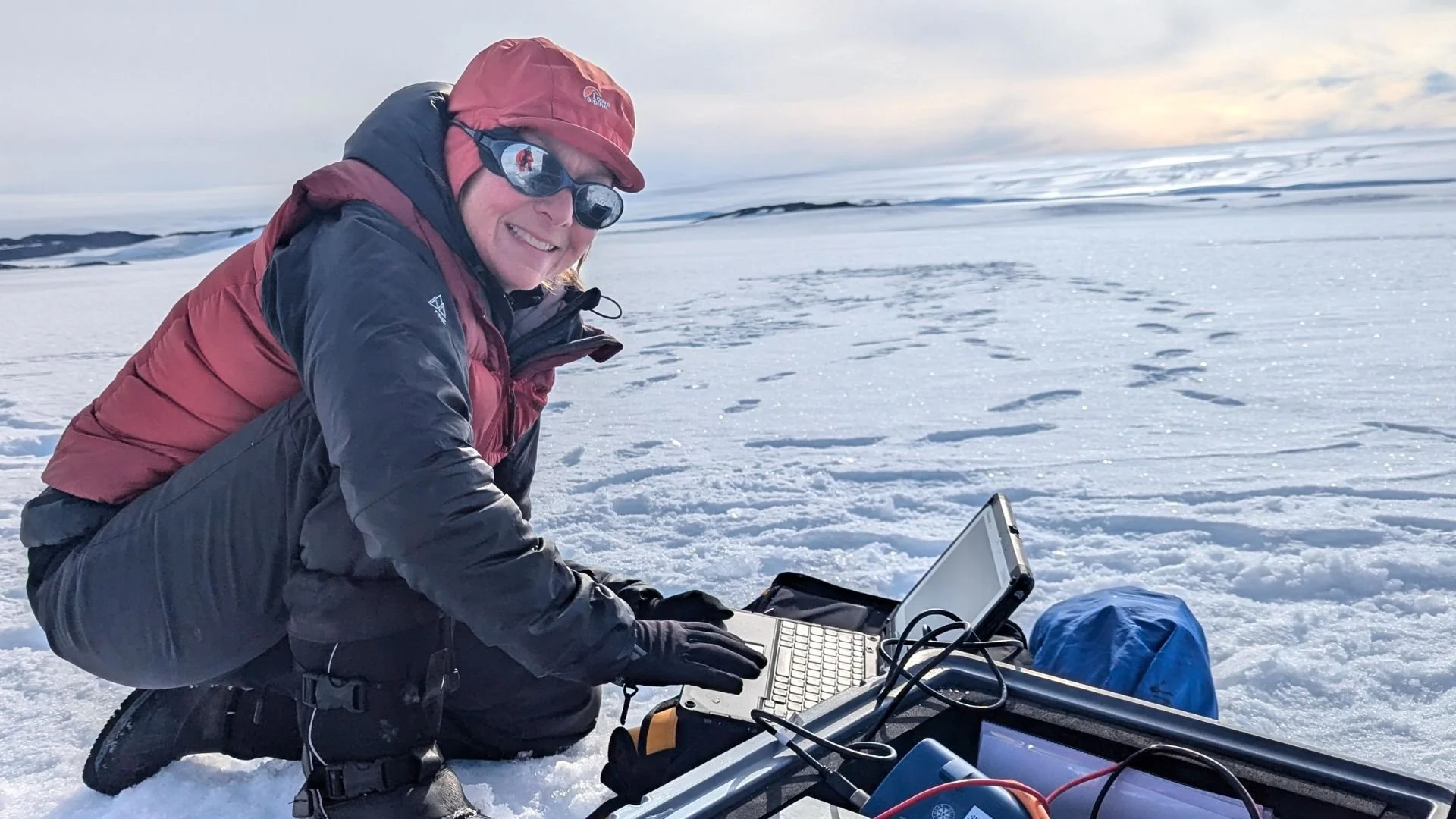
Professor Anya Reading (Field Leader, GRIT Director, Chief Investigator) downloads seismic data from a site near the Browning Penisula, East Antarctica, adjacent to the fast-changing Vanderford Glacier. Image: Arno Payan (Field Guide)
Our community continues to make remarkable progress exploring Earth's most remote and dynamic environments. Through ANZIC, Australia has formalised its involvement in the next phase of international ocean and continental drilling programs, joining global collaborations that probe deep into the Earth’s past.
ANZIC training initiatives, such as the Marine Geoscience Masterclass and the Capstan at Sea program, saw record numbers of applicants, helping to grow the next generation of marine geoscientists.
In Antarctica:
Dr Linda Armbrecht (University of Tasmania) completed sampling beneath the West Antarctic Ice Sheet at the CAM Ice Stream with the SWAIS2C sea team. Around 60 sediment core samples have already yielded ancient DNA, giving unprecedented insight into past ecosystems.
AuScope’s terrestrial heat-flow sensors were deployed from the RSV Nuyina to collect data off the Denman glacier, an important step towards understanding geothermal heat flow and its impact on ice and ocean circulation.
Teams from the University of Tasmania and Monash, with support from the Australian Antarctic program, deployed instruments to monitor Earth–ice interactions near the Denman and Vanderford Glaciers.
National Geophysics Infrastructure & Monitoring
At the Stawell Underground Physics Laboratory, a new site in Australia’s Semi-Permanent Support Network (M8), was installed, expanding our deep-earth monitoring capability.
Collaborative projects, including both the Fiordland Seismological Sounding of Landslides and Earthquakes (FISSLE) and South Island Seismology at the Speed of Light Experiment (SISSLE), Distributed Acoustic Sensing (DAS) and the Natural Hydrogen CRC-P project, reached successful completion with The Australian National University, University of Adelaide and H2EX.
Near-real-time data streaming from the University of Melbourne seismic network has gone live on our AusPass seismic data server for the first time.
Through the Seismometers in Schools program, students across Australia continue to explore seismology—building LEGO seismometers at the Australian Science Olympiad. Improvements to the network data handling have made the AuSIS network more robust and reliable than ever before.
AuScope EarthBank Platform
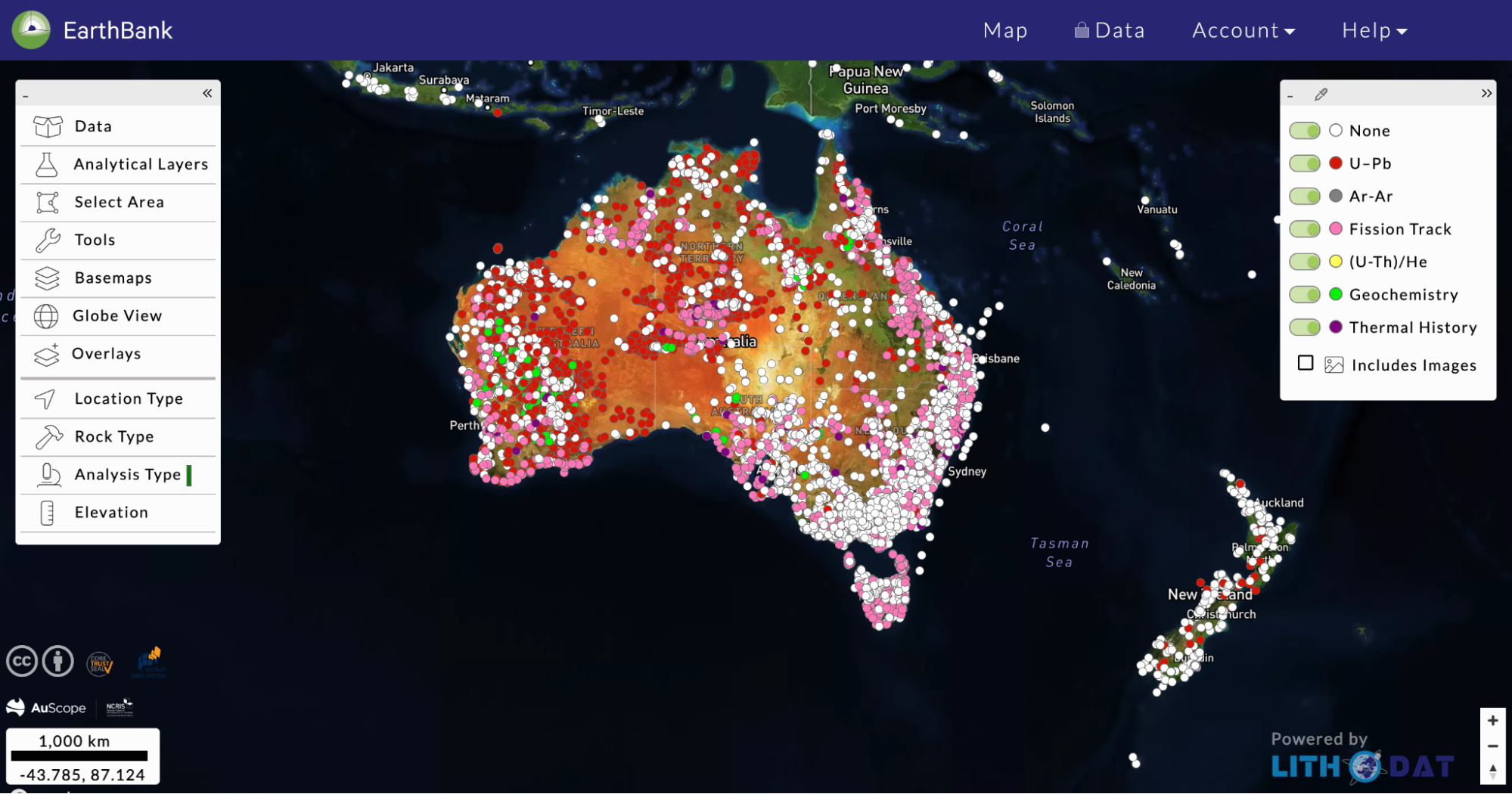
EarthBank portal. Image: AuScope
At Curtin University, Dr Bhavik Lodhia joined as Deputy Director of EarthBank, bringing expertise in hydrogen systems, basin modelling and geochemical data integration.
EarthBank became a regular member of the World Data System, reinforcing our commitment to open and FAIR data.
Geochemistry & Hyperspectral Advances
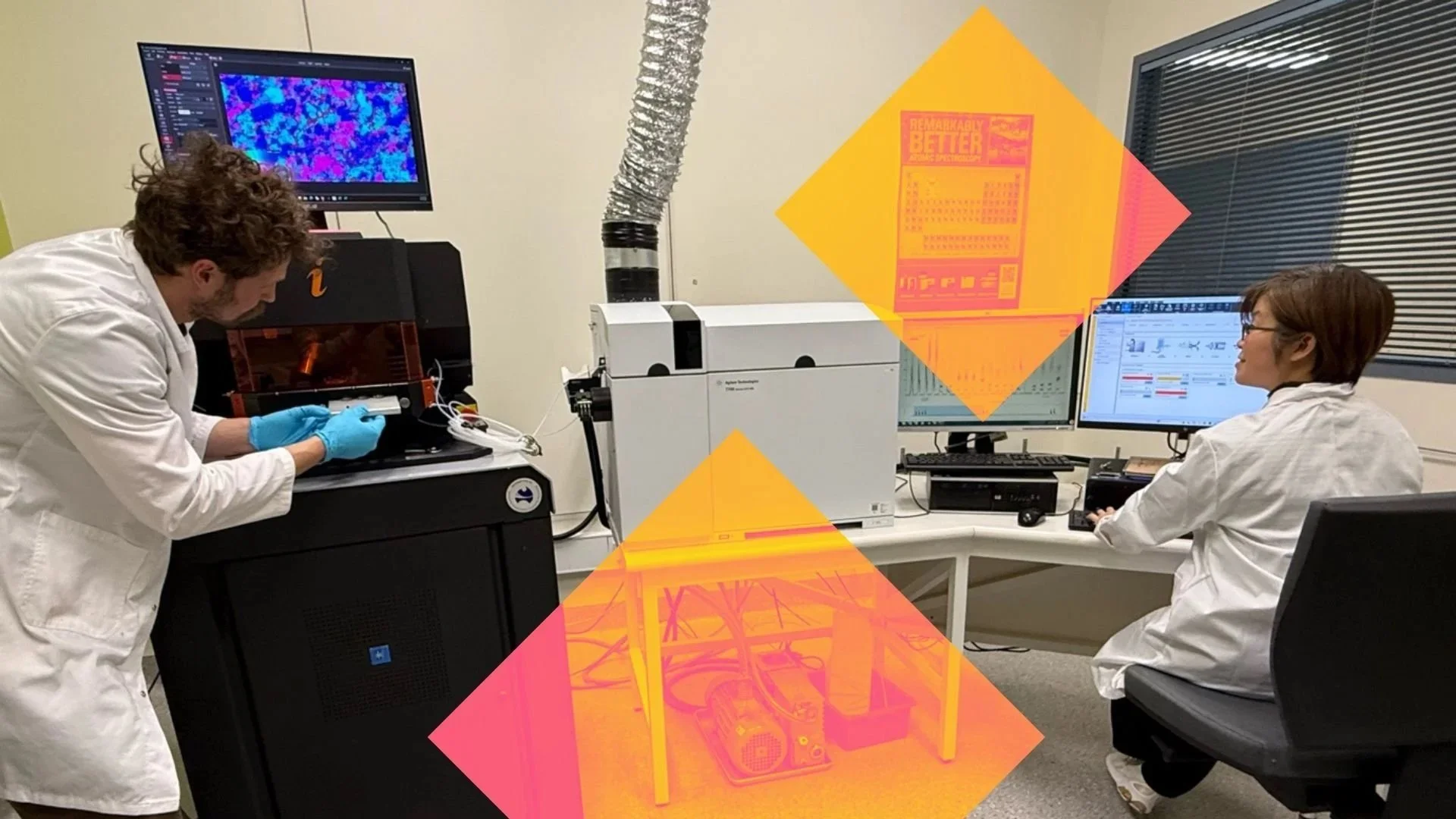
Dr Malcolm MacMillan and Dr Ling Chung with ESL193 ImageGEO Laser System. Image: Melbourne Thermochronology Research Group, The University of Melbourne, AuScope edited.
At the University of Melbourne, the new image geo laser system is revolutionising thermochronology, delivering faster analysis, superior ablation characteristics, and expanded analytical capabilities, opening new frontiers in landscape evolution and mineral exploration.
While at The Australian National University, new in situ high precision strontium isotope techniques are advancing our ability to trace lithospheric domains and improve geochronology data.
And in hyperspectral news, the new Hyperion microscope has been installed at The Australian National University, and three HyLogger 4 instruments have now been deployed at the Western Australia, New South Wales and South Australia Geological Survey National Virtual Core Library (NVCL) Nodes .
Hydrogeology & Groundwater Innovation
Our hydrogeological researchers achieved a world first: developing Australia’s first automated purification system for small-volume noble gas samples—only the second of its kind worldwide.
This system enables more precise groundwater dating and connectivity studies, critical for managing Australia's water resources.
Geospatial & Drone Research
The University of Queensland's coastal monitoring team deployed new drone infrastructure to support field campaigns ranging from coral-reef mapping in Vanuatu to surveys of earthquake-related coastal damage, while collaborating with NCRIS partners and international researchers.
A local tie survey was conducted at the Yarragadee Geodetic Observatory, encompassing Global Navigation Satellite System (GNSS), Satellite Laser Ranging (SLR), Very Long Baseline Interferometry (VLBI), and Doppler Orbitography and Radiopositioning Integrated by Satellite (DORIS) infrastructure.
An airborne gravity survey over Victoria and Greater Adelaide with completed, improving our national gravity models and geological understanding.
Modelling & Data Innovations
The CoastRI GADOPT team at The Australian National University are advancing modelling of glacial isostatic adjustment, laying the groundwork for more accurate projections of Earth’s viscoelastic response.
GPlately 2.0 was released at The University of Sydney, with enhanced plate motion and tectonic modelling capability.
The AVRE team at CSIRO launched the new AuScope-CAT python package and SEED Vault software, giving researchers and industry powerful new tools to discover and visualise
Inspiring the Next Generation
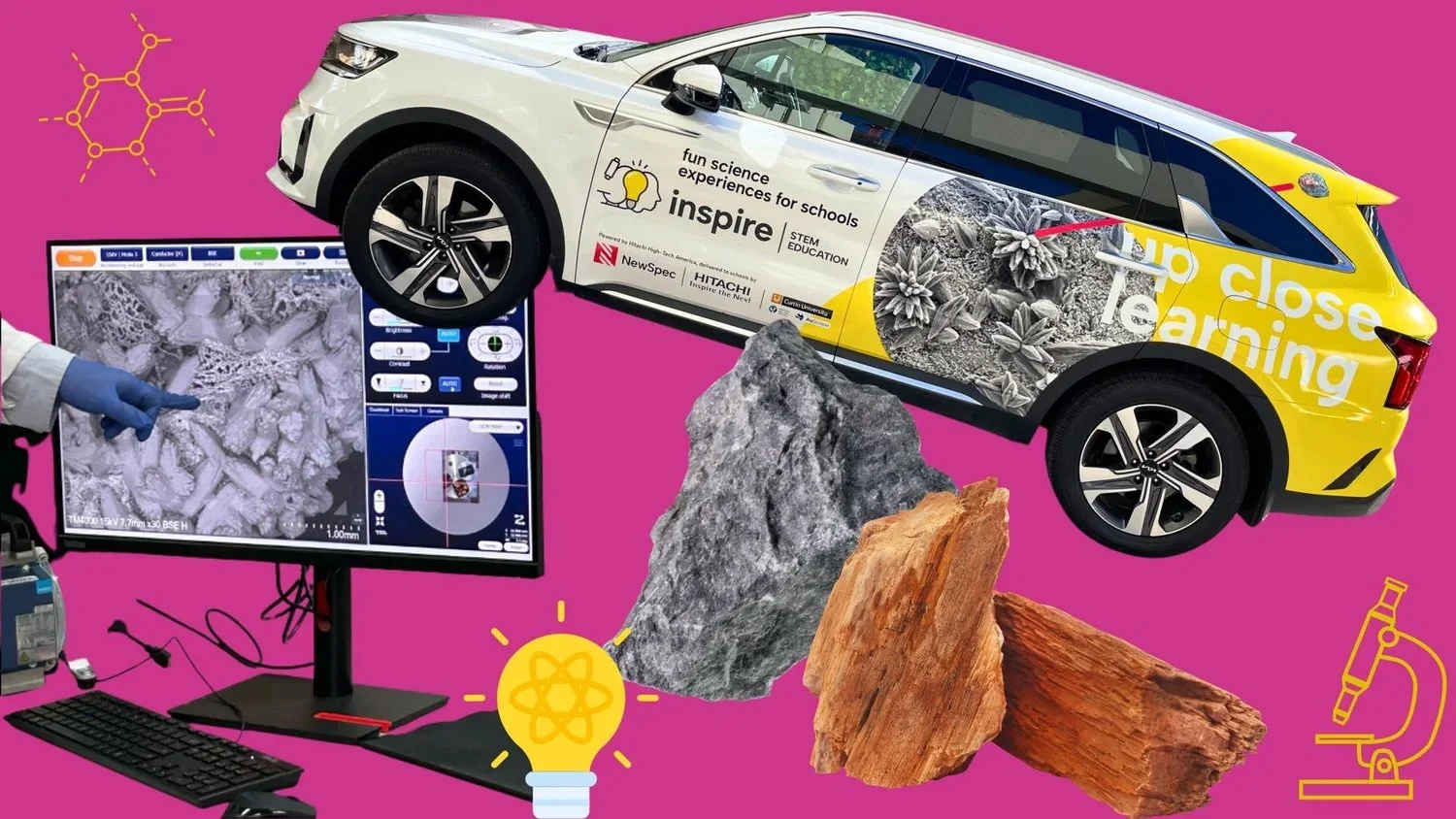
InspireWA's portable scanning electron microscope (SEM) is sparking imaginations. Image: AuScope
Thanks to the partnership between our EarthBank program and the Inspire STEM Education program in WA, primary and secondary students across Western Australia now explore the microscopic world using research-grade scanning electron microscopes—magnifying objects up to 100,000 times.
Their discoveries range from pollen and bone to strands of hair and mysterious objects, limited only by curiosity and imagination.
Awards and Recognition
And finally, we congratulate:
Professor Lesley Wyborn – awarded the 2025 Ian McTaggart Medal by the EGU
Professor Anya Reading – ARC Laureate Fellow
Professor Matt King – ARC Laureate Fellow
Professor Hrvoje Tkalčić – ARC Laureate Fellow
These honours reflect transformative work shaping our understanding of Earth and planetary systems.
Closing Reflections
Powered by open access, collaboration, and world-class infrastructure, these achievements highlight the strength of Australia’s geoscience community and the vital role shared data, instruments, and collaboration play in building a resilient and prosperous future.
Thank you to everyone across AuScope, our partners, and the NCRIS team for another inspiring year.
Narrated by: Dr Tim Rawling
Filmed by: CruzMedia
Edited: Dr Rebecca Farrington & Philomena Manifold
FURTHER INFORMATION
National Collaborative Research Infrastructure Strategy (NCRIS)
2025 IMPACT CASE STUDIES