EarthBank Node | Queensland University of Technology
High-precision geochemical analysis and data integration powering Australia’s Earth science research
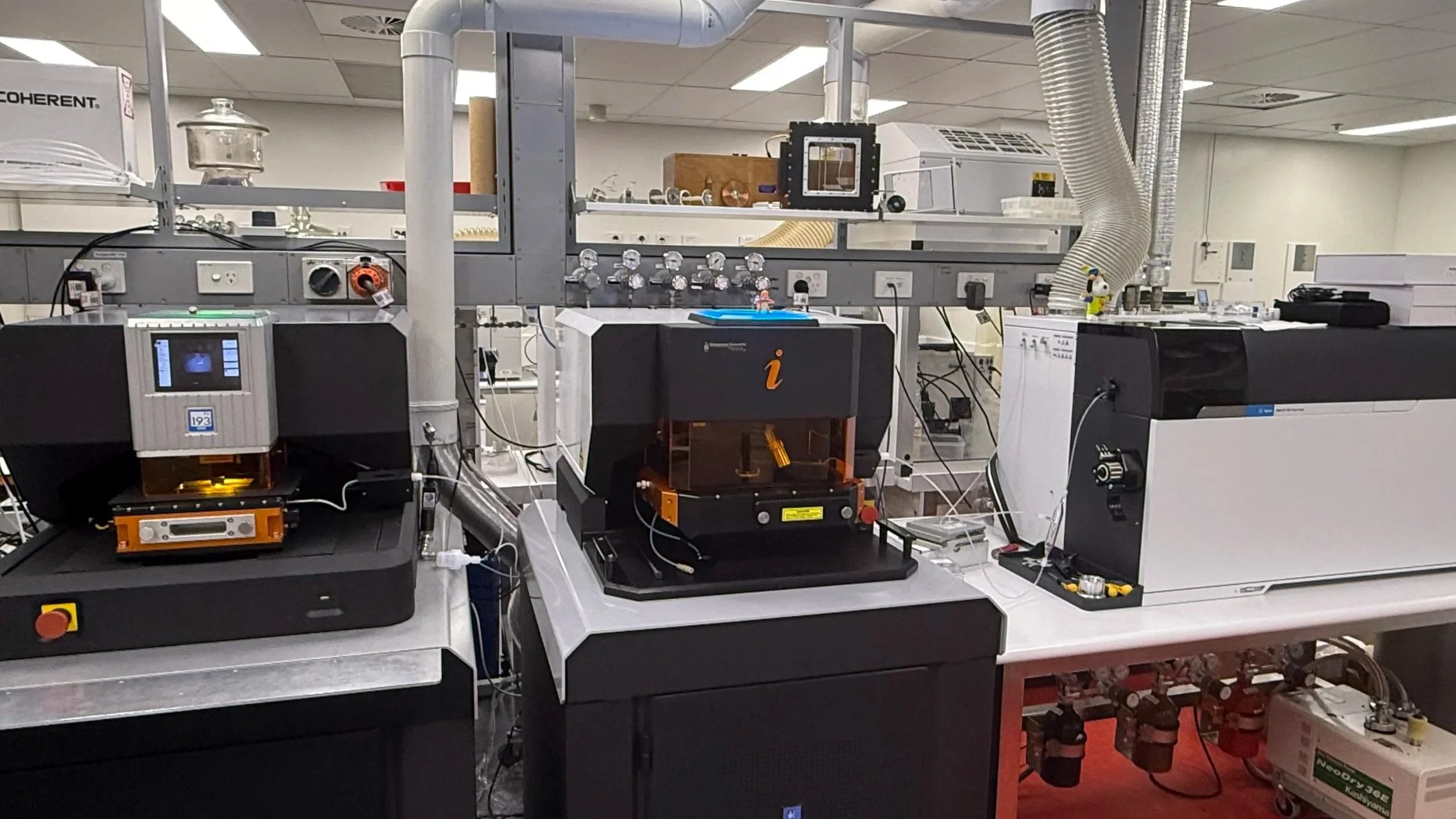
ESL NWR193 UC and imageGEO193 laser systems together with an Agilent 8900 QQQ-ICP-MS at the Central Analytical Research Facility, Queensland University of Technology. With flexible coupling options, these LA-ICP-MS systems enable rapid, sensitive and precise elemental and isotopic analysis of solid samples, covering most of the periodic table from lithium to uranium. A broad range of reaction gas options enables analysis of multiple novel isotope systems. Image: John Caulfield
About us
The Central Analytical Research Facility (CARF) at the Queensland University of Technology (QUT) hosts $50M of analytical infrastructure. Queensland University of Technology is an associate EarthBank partner, offering state of the art analytical infrastructure across Sample Preparation, Elements and Isotopes, Microscopy, X-Ray, Vibrational Spectroscopy and Physical Properties. QUT’s analytical facilities enable hands on expert user training in sample preparation, data acquisition and processing, enabling laboratory data to be captured, standardised and managed through the AuScope EarthBank platform.
Overview
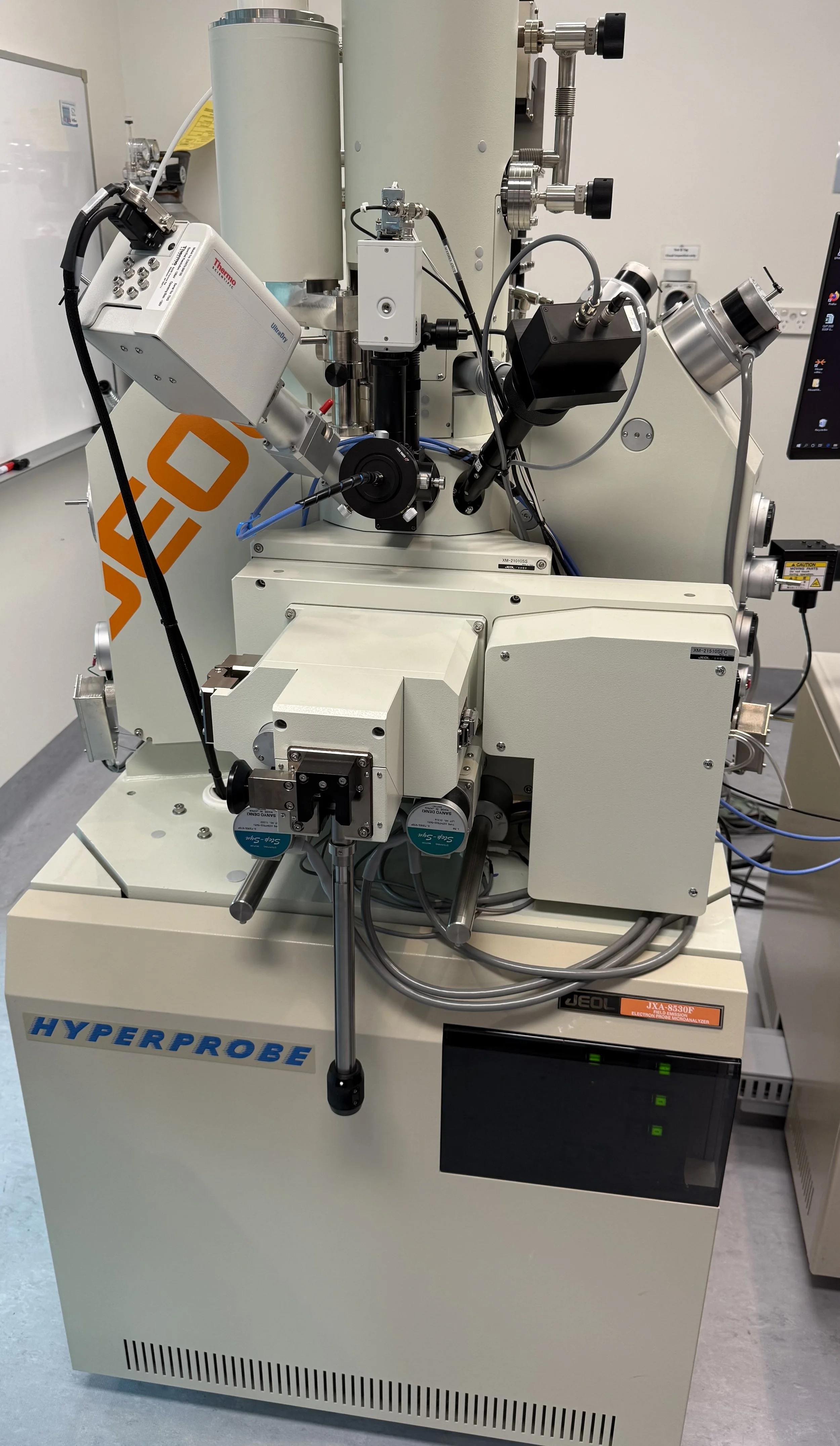
JEOL JXA 8530F Hyperprobe at the Central Analytical Research Facility, Queensland University of Technology.
Equipped with five Wavelength Dispersive Spectrometers, the JXA 8530F generates high precision quantitative elemental analysis of solids as well as advanced panchromatic cathodoluminescence imaging. Image: John Caulfield
“The unique centralised infrastructure model at QUT provides researchers and industry partners access to world class analytical capabilities and training to address current and future questions at the forefront of earth science”
– Dr. John Caulfield
The Node
The Central Analytical Research Facility is housed at QUT’s Gardens Point Campus on Turrbal and Yuggera Country, Brisbane, Queensland.
The facility provides world-class multi-disciplinary analytical characterisation capabilities, including chromatography, CNS analysis, mass spectrometry, spectroscopy, microscopy and physical and mechanical properties. We provide collaborative support for researchers across academic disciplines (Faculty of Science, Faculty of Engineering), together with local government agencies, including the Geological Survey of Queensland (GSQ).
The world-class facility provides access and support to internal and external researchers and HDRs, as well as industry and government partners. CARF offers both assisted and unassisted analysis, with options for one-off sessions and long-term agreements.
QUT node related inquires: john.caulfield@qut.edu.au
Central Analytical Research Facility analytical enquiries: carf@qut.edu.au
What we do
Research and technical support:
Project planning and analytical strategies
Advanced training
Workflow design/optimisation
Multidisciplinary analytical workflows
Maintenance and troubleshooting
Analytical testing
Analytical capabilities:
Solution and in situ trace element analysis (ICP-OES, LA-Q-ICP-MS, LA-QQQ-ICP-MS, Discrete Analyser)
Automated mineralogy (TESCAN TIMA)
EPMA
Confocal microscopy, interferometry
RAMAN spectroscopy
In situ geochronology (LA-Q-ICP-MS, LA-QQQ-ICP-MS)
XRF, XRD
Porosity, hardness testing, thermal conductivity, mechanical testing, particle size
How to access
Training and events

Queensland University of Technology Node
Node Leaders
John Caulfield

Analytical Facilities
Location
AuScope Program