EarthBank Node | Australian National University
High-precision geochemical analysis and data integration powering Australia’s Earth science research
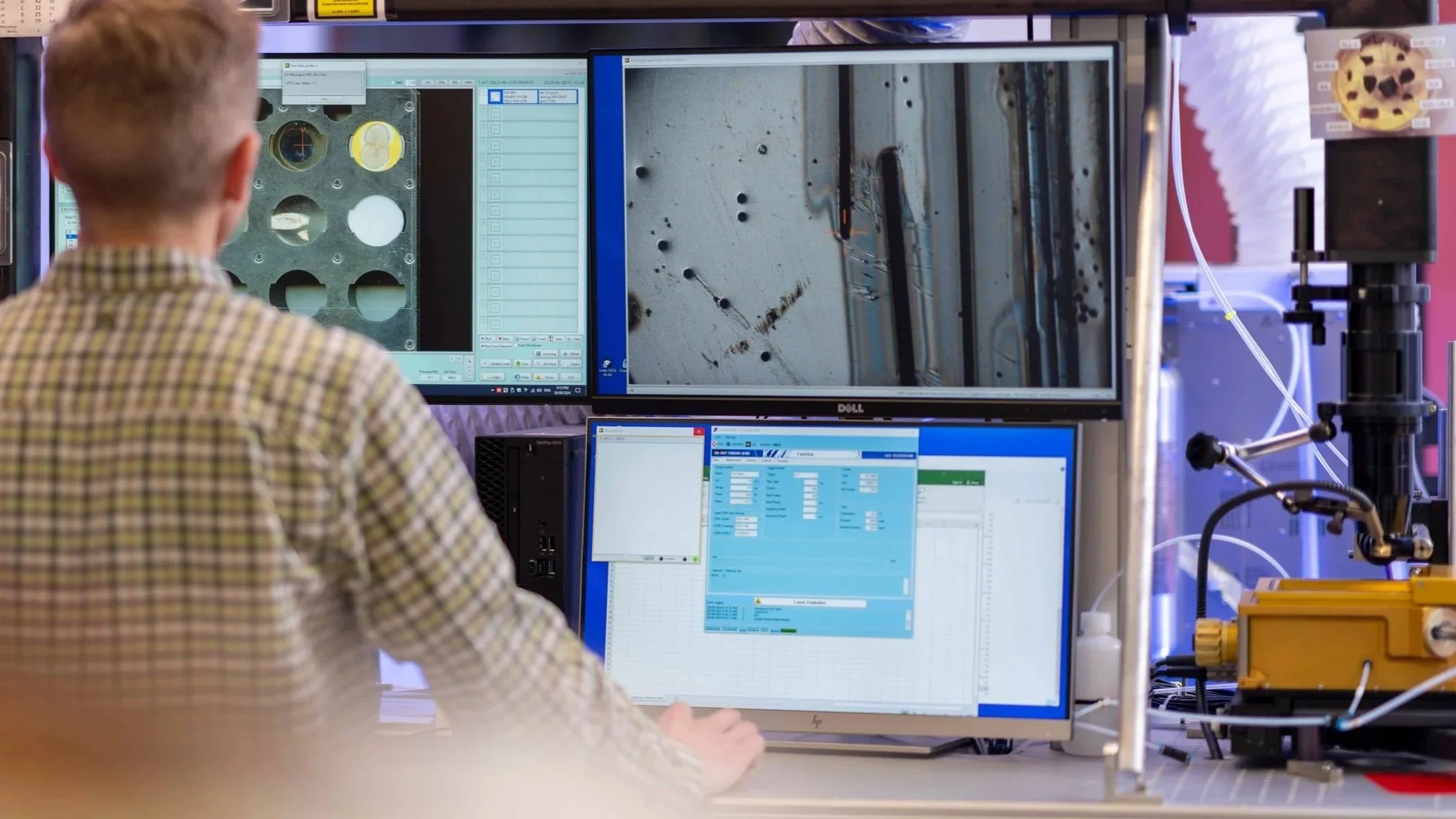
Laser Ablation Plasma Mass Spectrometry, RSES, Australian National University. This facility enables highly sensitive/precise elemental, isotopic and geochronological analysis of solid materials at the micron scale. Image: Brett Knowles
About us
The Research School of Earth Sciences (RSES) hosts the Australian National University Node of the AuScope EarthBank Project and depends on the AuScope Earth Composition and Evolution Program. By integrating nationally significant analytical infrastructure, the ANU Node generates high-precision geochemical and geochronological data in support of national and international geoscience research. Alongside this, RSES geochemical facilities develop and refine workflows that enable laboratory data to be captured, standardised, and managed seamlessly through the AuScope EarthBank platform.
Overview
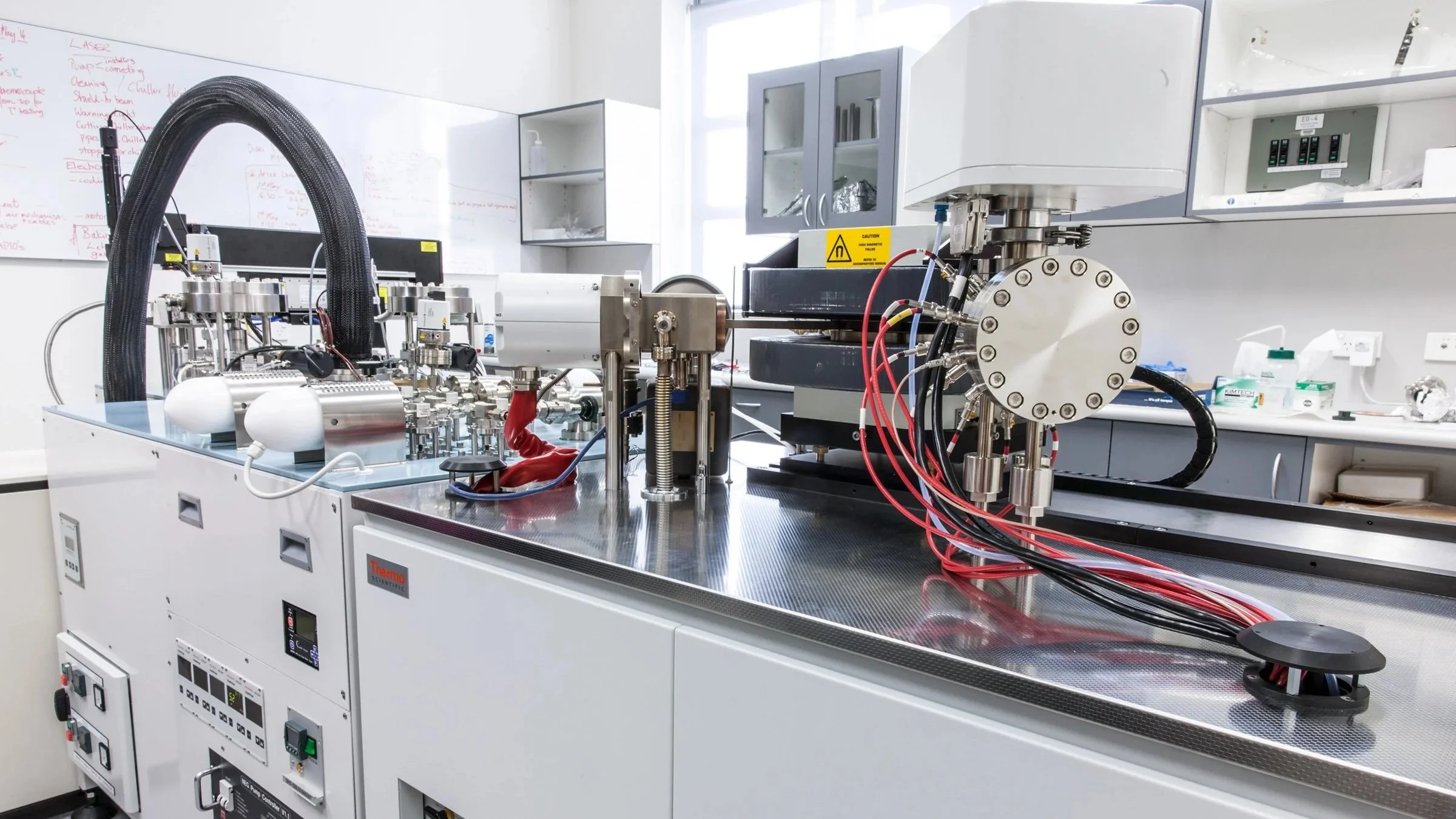
ARGUS VI Multi-Collector Noble Gas Mass Spectrometer, RSES, Australian National University. This state-of-the-art instrument enables measurements of argon isotopes (40Ar/39Ar), allowing the precise age determination of rocks, minerals and planetary samples. Image: Marnie Forster
“In the heart of the Nation, the RSES offers access to world-class geochemical facilities to answer some of Earth’s most fundamental questions - from the origins of our planet to the chemical processes shaping its future.”
– Dr. Yoann Gréau
The Node
The ANU Node is based at Research School of Earth Sciences, The Australian National University, Ngunnawal and Ngambri-Kamberri Country (Canberra), Australian Capital Territory
Fully embedded within the G2TESE (Geochemistry-Geochronology to Track Earth Systems Evolution) group, the Node supports world-class geochemical analytical and characterisation facilities (e.g. SHRIMP, ICP-MS, MC-ICP-MS, TIMS, IR-MS), but also the wider geochemical needs of other research groups within RSES, the ANU (e.g. archaeological sciences) and local governmental agencies (e.g. Geoscience Australia)
The ANU Node is strongly involved in the development of the AuScope EarthBank Platform, notably with the creation and curation of geochemical data models (e.g. U-Pb geochronology, isotope tracers, beta-decay geochronology).
What we do
Research and technical support:
Project planning and analytical strategies
One on one training/onboarding
Workflow optimisation
Troubleshooting
Technical upgrades
Maintenance
Analytical capabilities:
Solution and in situ trace element analysis (ICP-OES, (LA-)ICP-MS, SHRIMP
Solution and in situ stable isotope ratios (SHRIMP SI, (LA-)MC-ICP-MS)
Solution and in situ radiogenic isotope tracers/geochronology (TIMS, (LA-)MC-ICP-MS)
In situ geochronology (SHRIMP, LA-ICP-MS, LA-ICP-MS/MS)
Argon-Argon geochronology
Data infrastructures:
Data model developments
Legacy datasets/collections curation and dissemination
Geochemical data reporting best practices
FAIR data implementation
How to access
Training and events
Impact/success stories
Node Leaders


AuScope ECE Fellow(s)

Location
AuScope Program