Ancient plate collisions shaped Earth's mineral wealth
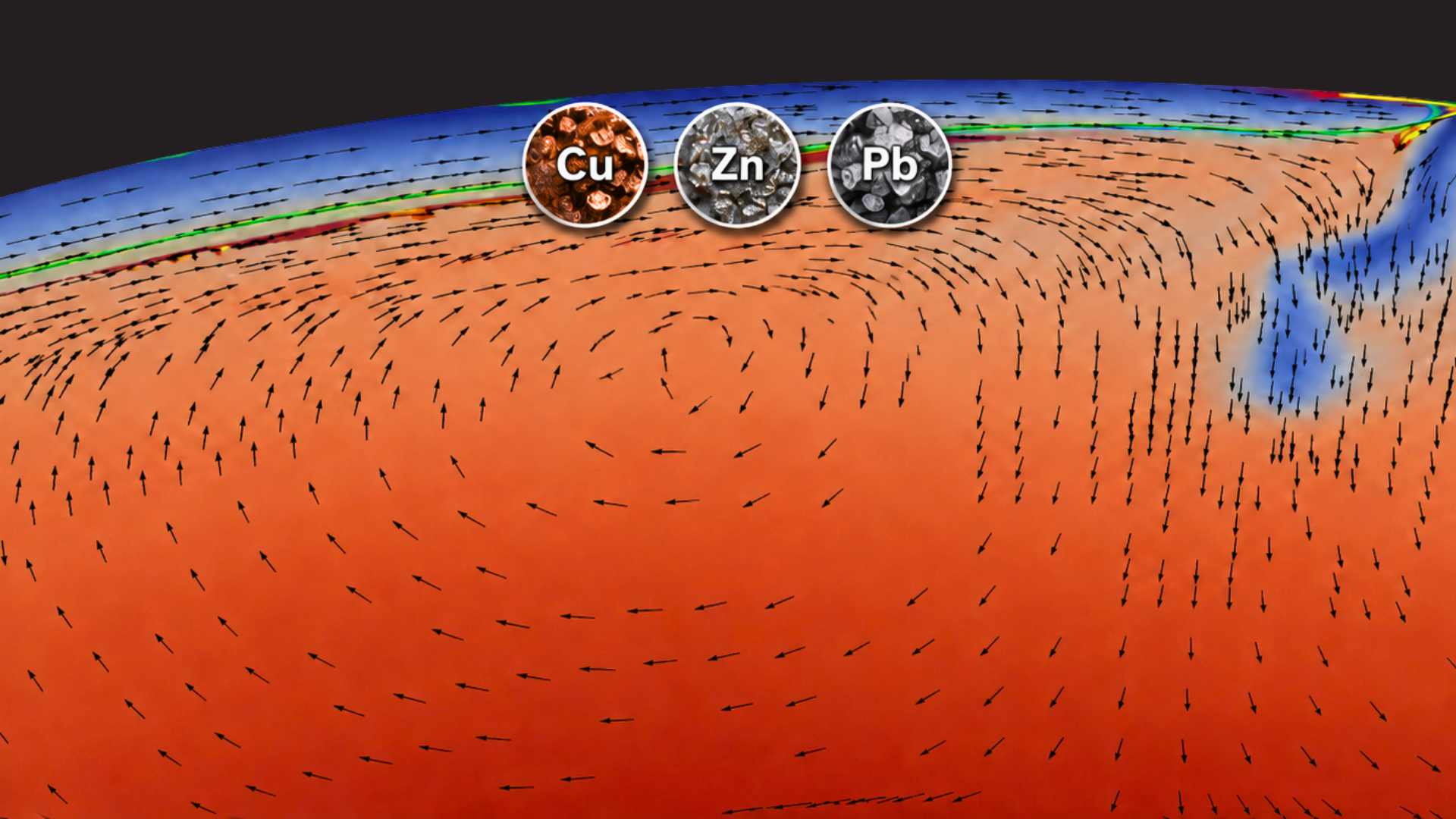
Subduction causes mantle flow and deformation beneath craton edges. Image: Supplied
AuScope enabled researchers are providing a new deep-time framework for understanding where major sediment-hosted copper, zinc and lead deposits form — with implications for future mineral exploration.
Essential Resources
Critical and base metals such as copper, zinc and lead are essential for infrastructure, clean energy technologies and modern manufacturing. Understanding the deep-time processes that concentrate these resources can help improve exploration targeting, reduce uncertainty and support Australia’s long-term resource security.
Subduction Meets Mineralisation
Plate tectonic animation with cratons and location of deposits. Video: Supplied
Recently published in Nature Communications, this AuScope enabled study, led by the EarthByte Group at the University of Sydney, has shown that some of the world’s most important sediment-hosted mineral deposits formed in a surprisingly consistent tectonic setting: along the edges of ancient cratons, typically 800–1,800 kilometres from active subduction zones at the time the deposits formed. Cratons are the ancient, stable cores of continents. Their margins are long-lived zones of weakness that can act as pathways for mineralising fluids.
“Many of these deposits formed far from plate boundaries, but our results show they were still linked to subduction. Deep mantle flow can transmit stress thousands of kilometres into the continent, helping to weaken craton edges and create the conditions needed for mineralisation.”
– PhD student and lead researcher Hojat Shirmard
The study brings together global plate reconstructions, seismic tomography, geodynamic modelling and a database of more than 2,000 mineral deposits to explain why some craton edges became mineral-rich while others remained comparatively barren.
Distance Matters
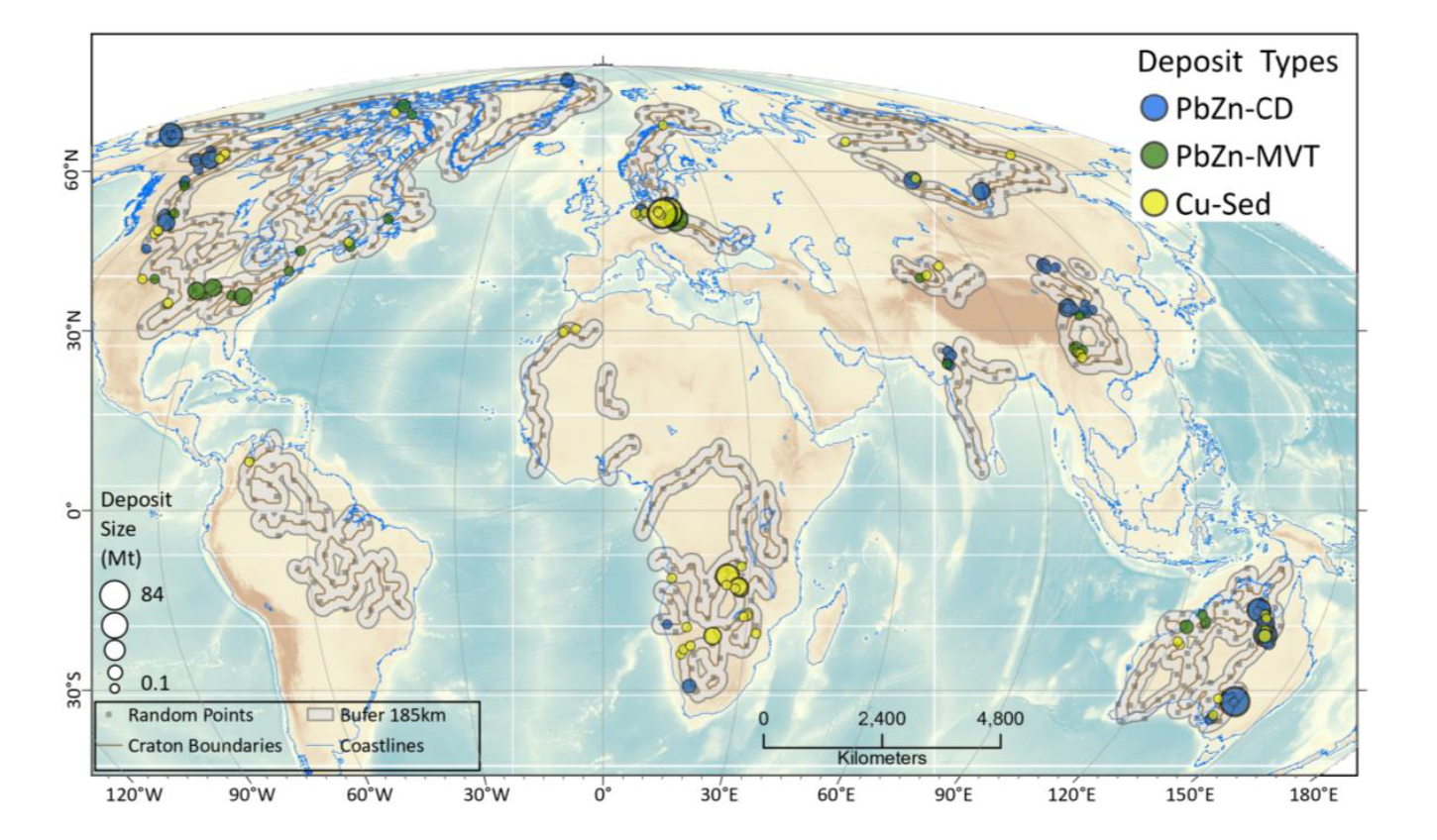
Location of 500 randomly generated points across 180 time steps (1 to 1,800 Ma at 10 Ma 535 Intervals). Image from Shirmard, H., et. al. (2026). How Subduction Evolution Drives Sediment-Hosted Mineralisation Along Craton Edges.
The team found that mineralised craton edges cluster much more closely to ancient subduction zones than do random craton-edge locations. The median distance from a trench to deposits was about 1,200 kilometres, and more than 90 per cent of the total metal content analysed lies within 2,200 kilometres of ancient subduction zones.
Numerical models show why this distance matters. Subduction can create broad mantle return-flow cells extending thousands of kilometres from the trench. These flows focus stress and strain near craton edges, promoting lithospheric weakening, rifting, permeability and the movement of volatile-rich fluids. Over geological time, these processes can precondition the crust and mantle for the formation of major sediment-hosted copper, lead and zinc deposits.
The work provides a new way of thinking about mineral exploration. Rather than focusing only on local basin conditions, it places mineral systems into a global tectonic framework that links resource formation to plate motions, mantle flow and supercontinent cycles over the past 1.8 billion years.
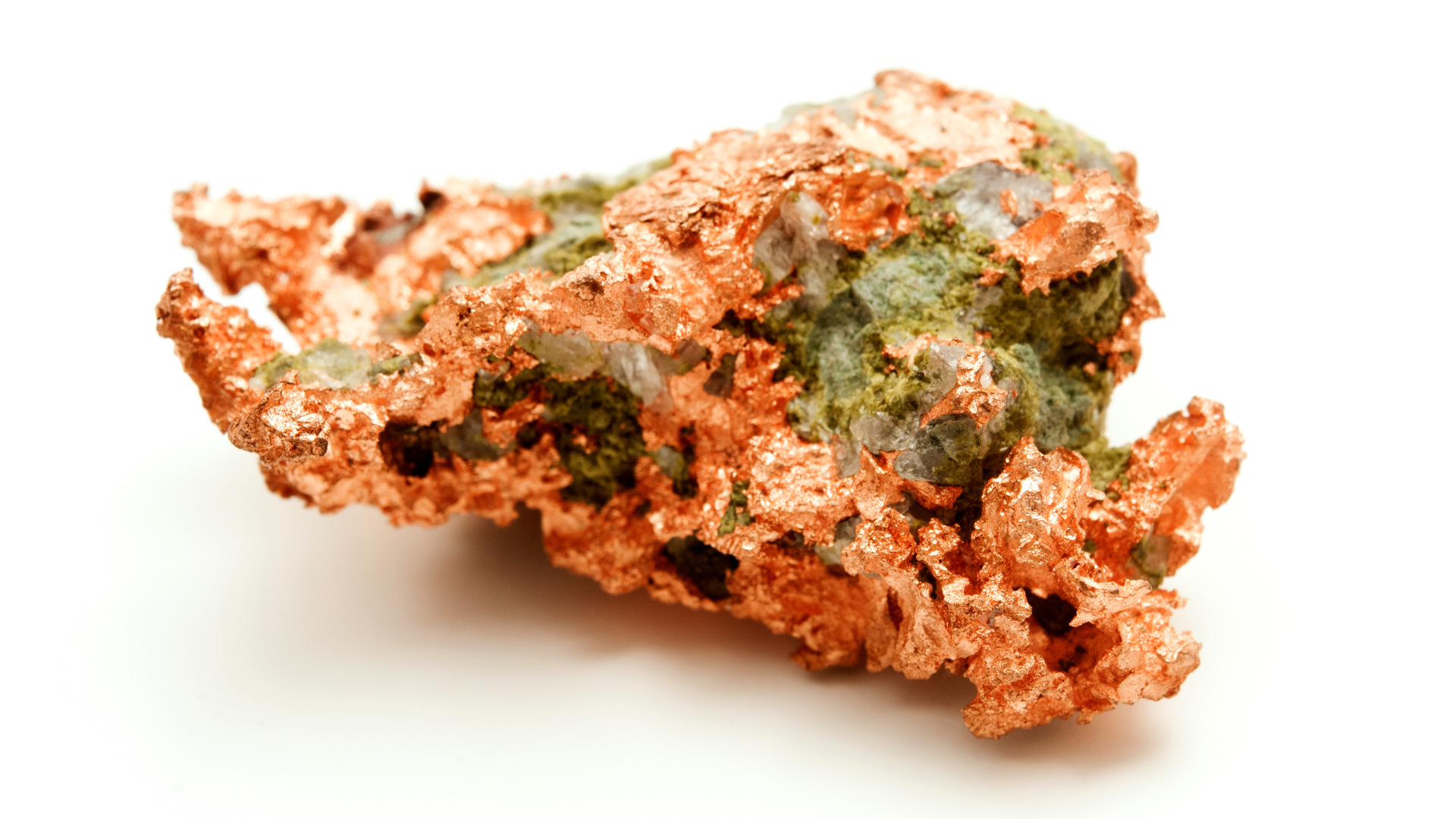
Native Copper. Image: Unsplash
AuScope-supported tools and infrastructure were central to this research. The study used plate reconstruction workflows built around GPlates, pyGPlates and GPlately, enabling the team to reconstruct craton boundaries, mineral deposits and subduction zones through deep time. GPlates and pyGPlates development is supported through the AuScope National Collaborative Research Infrastructure System (NCRIS) program.
“This is exactly the kind of discovery that national research infrastructure makes possible. AuScope-supported tools such as GPlates and pyGPlates allow researchers to reconstruct Earth’s deep-time evolution and turn that knowledge into practical insight for Australia’s minerals sector.”
– Group leader and co-author Dietmar Müller
This research demonstrates how national research infrastructure can help Australia better understand the geological processes that create critical mineral systems. By improving our ability to reconstruct Earth’s tectonic history, AuScope-enabled science supports more informed, data-driven approaches to mineral exploration — a key capability for Australia’s resource future and the global energy transition.
STORY IN A NUTSHELL
NCRIS enabled researchers from the University of Sydney have shown that ancient subduction zones created major copper, zinc and lead deposits along craton edges, providing a new framework to improve critical mineral exploration.