EarthBank Node | University of Melbourne
High-precision geochemical analysis and data integration powering Australia’s Earth science research
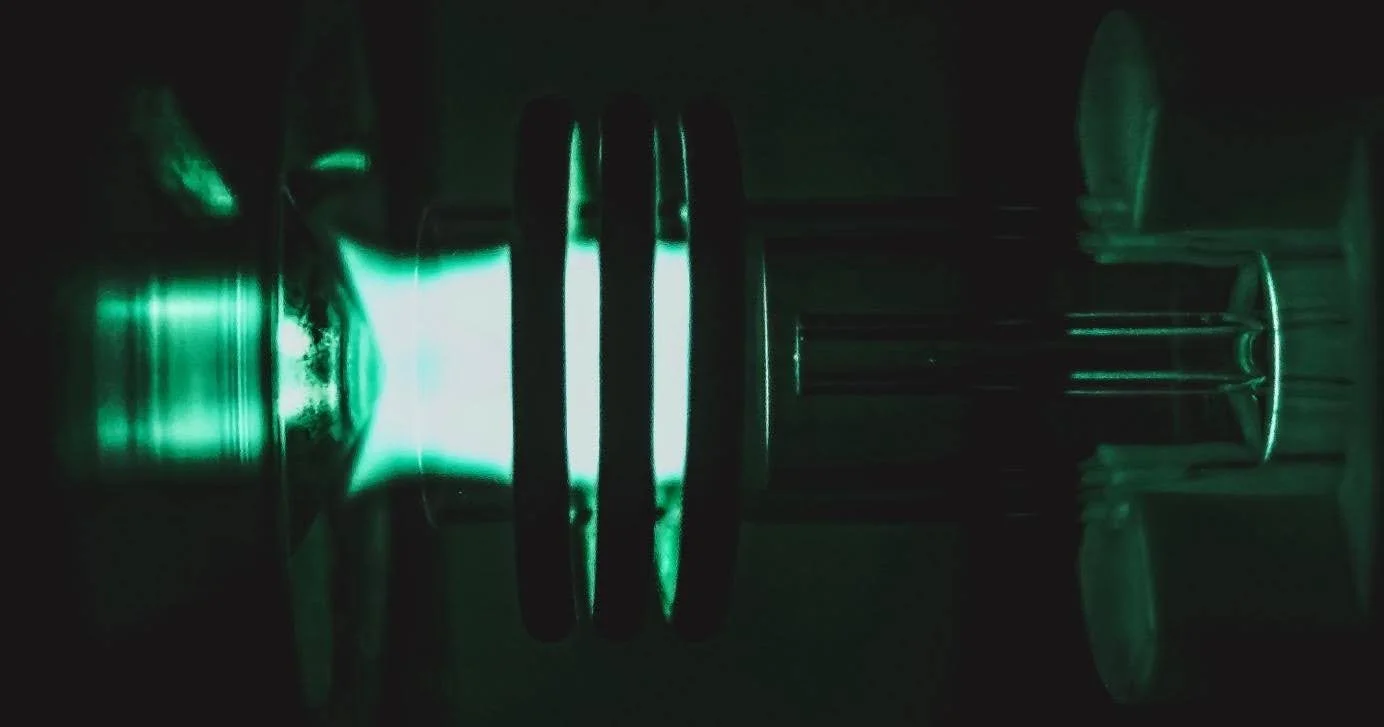
The UoM Node of the AuScope Earth Composition and Evolution (ECE) Program, the AuScope EarthBank Project, and the Australian Geochemistry Network (AGN), is host to an integrated suite of geo-analytical facilities with world-class strengths in both solution and laser ablation based inductively coupled plasma mass spectrometry (ICP-MS) techniques for comprehensive elemental/isotopic characterisation. Image: ICP Torch. Image: Brandon Mahan
About us
The University of Melbourne AuScope ECE and EarthBank Node delivers advanced elemental and isotopic characterisation capabilities and geo-analytics for both discovery and applied research, realised through its integration within the Melbourne Isotope Analytics Research Platform. Our integrated facilities serve as nationally significant research infrastructure for internal/external collaboration, community, and accessibility to world-class geo-analytical capabilities. We have a passion for the development of lab, analytical and digital workflows across geochemistry, geochronology and thermochronology, all towards enabling and democratising Earth Science research and accessibility to geochemical tools, data and knowledge across academia, government, industry and the broader community.
Overview
University of Melbourne’s facilities and passion for cutting-edge geo-analytical tools and approaches extend back to the establishment of the original electron microprobe (EPMA) and Fission Track Laboratories under John Lovering in the 1970s, and the Isotope Geochemistry Laboratories in the 1990s, now expanded to a broad range of analytically based Earth Science research facilities. We have been a core member of AuScope’s geo-analytical activities since 2007 as a founding member of the AuScope Earth Composition and Evolution (ECE) Program and have grown and strengthened these activities through longitudinal commitment and a shared vision now being realised through the AuScope EarthBank Project. Led by Dr Brandon Mahan as Director, our UoM Node is driven by the expertise of over a dozen academic, specialist and professional staff, at the helm of numerous instruments held within and supported by several laboratory facilities (including three ISO geochemistry clean labs, two of which house instrumentation for ultra-low quantification).
The core geo-analytical capabilities within our UoM Node include solution and laser ablation ICP-MS techniques across trace/ultra-trace element quantification, stable and radiogenic isotope ratio determination, conventional and noble gas geochronology, fission track and (U-Th)/He thermochronology, with our expertise and capabilities now also extending into laser induced breakdown spectroscopy (LIBS) as well as other beam-based quantitative technologies (e.g. XRF) and novel mass spectrometric approaches. Our facilities also include several laboratory environments for lab and analytical preparation, from ultra-clean lab spaces for solution-based work, to a suite of solid sample preparation facilities (rock crushing/powdering, mineral separation, sample mount preparation), plus automated digitisation microscopy and sample fiducial coordination and 3D print design and fabrications.
In addition, and as the home and incubator of several worldwide flagship software systems for geo-analytical data, iolite and Fission Track Studio, we have a long-standing history in the establishment and translation of digital infrastructure and physical-to-digital pipelines development for automated workflows for geo-analytical equipment and instrumentation, digital data processing and multi-dimensional statistical interrogations (e.g. equipment-instrument-platform data/metadata importers).
The UoM AuScope EarthBank Node operates within the Melbourne Isotope Analytics [MIA] Research Platform and currently comprises major facilities within this centralised platform optimised for operational sustainability, productivity, accessibility and research impact. The UoM Node is the culmination and integration of decades of R&D and high-impact research outcomes across trace element and isotope geochemistry, geochronology and thermochronology, borne out of three core facilities that have stood for several decades.
In addition to the core geo-analytical capabilities described above and on our MIA Website, we have a long-standing history in developing lab and analytical capabilities along new frontiers, from pioneering novel analytical techniques in geochemistry and geochronology, to delivering new tailored analytical approaches for difficult research context and sample types, all the way to workflow development and execution for scalable high-precision isotope analytics and data packages at the regional-to-national scale (including ‘isoscaping’).
Our core research lies at the interface of Earth and Environmental ‘-spheres’ where geochemical fingerprinting, absolute age dating, and/or thermal histories are important to the research questions at hand. While we maintain and cultivate a strong footprint in conventional applications such as differentiating geological reservoirs in hard-rock applications, understanding tectonic/thermal histories tied to landscape evolution, and characterising elemental/isotopic systematics in critical resource exploration and extraction, we extend these geochemical tools into exciting emerging domains at the interface with other ‘-spheres’ such as dating and source-tracing extra-terrestrial, modern and ancient human-made materials (e.g. ancient ochres, modern agricultural products), characterising environmental and ecological webs and anthropogenic impacts, all the way to constraining the timing and intricacies of Earth and human evolution, and the intersection of human health and the environment.
We maintain a vibrant and highly active collaborative research environment both at University of Melbourne and through broad-reaching national and international collaborative networks, from academic pursuits aimed at fundamental discovery science, to practical applications at the intersection of academia with government, industry and private/philanthropic organisations. We pro-actively collaborate at these intersections and work with our collaborators to deliver high-impact data and interpretations for delivery into the public domain through scholarly outputs (publications, conference proceedings), government/industry reporting, and an array of engagement and outreach activities.
Reach out! We are always keen to develop new approaches, partnerships and collaborations, and uphold a commitment and vision for highly accessible, high-impact research infrastructure at all levels (including student/GR research) and all sectors.
“As they say, ‘Going far means going together’: Through AuScope EarthBank and the ECE Program, as a unified front, we work together to propel impact, reach and democratisation of Earth Science research and research infrastructure—physical, digital and informational—towards addressing global challenges and foster tomorrow’s researchers and discoveries – Brandon Mahan, Node Leader
What we do
Our UoM node conducts isotopic characterisation (elemental/isotopic, geochronology, thermochronology) mainly through geo-analytical research infrastructure. We provide collaborative research, analytical research services, and research support and training across all skill levels and sectors.
Operating on FAIR principles, our large suite of Analytical Capabilities is highly accessible and can be found at our MIA Research Platform website, supporting research including (but not limited to):
Resource futures / Earth resources
Geochronology and Thermal Histories
Paleo/modern forensics (e.g. agriculture/livestock, synthetic and earthen products)
Environmental Geoscience (e.g. environmental impact, bio-availability characterisation)
Water Resources and Society
Earth system interactions
Solid Earth
Planetary/Space research
Ecology and Agricultural Provenance
Climate and environments past, present, and future
Archaeological science, dating, migration, mobility
We also collaborate on and offer data and data infrastructure support across:
Image fiducial coordination for cross-instrument data-layering
Supervised automated data processing (including QA/QC)
Customised analytical-to-software solutions for context-specific workflows
Automated grain detection and target identification for follow-on beam-based analyses
Data packaging, integration (e.g. into regional-to-international frameworks), and publication
Additionally, we provide Research Support through:
Project planning and co-development
Sample preparation (mount preparation; digestion and chemical separation
Access to large global mineral separate collections for further analysis
Induction and Training
Trouble-shooting and technical support
Data statistics and management
We value and place high importance on fostering knowledge sharing and development, community, engagement and inclusivity. Keep up with our website and socials for the latest in not only our research activities and outputs, but our pro-active community building, outreach and engagement activities.
How to access
As our UoM Node is within our University of Melbourne MIA Research Platform,information and physical accessilbity are both straightforward:
For initial general information on research capabilities within our Node, please visit the following website and specific facility-level capabilities: https://research.unimelb.edu.au/facilities/infrastructure/melbourne-isotope-analytics-research-platform
For all initial research/service enquiries, please contact: MIA-Platform@unimelb.edu.au
For all enquiries or requests for those already familiar with our system, please visit: MIA iLab Core
For all general enquiries regarding our UoM Node please contact: brandon.mahan@unimelb.edu.au
For general enquiries regarding the AuScope EarthBank project: Email earthbank.hq@curtin.edu.au
We recommend reaching out to us first through the above relevant channels. From there, for new partners we will steward you through the process, including helping you set up a profile in our University’s MIA iLab Core (where relevant for new partners), our digital ecosystem where all our geo-analytical services can be accessed.
Training and events
Upcoming events feed (or 3 cards)
Query how to have this embedded/linked to MIA website to feed latest 3?
Links to recordings/resources
2026 ANZ LA-ICP-MS & LIBS User Group Meeting (01-02 June 2026)
“Subscribe for updates” CTA (optional)
Impact/success stories

University of Melbourne Node
Node Director

AuScope EarthBank Project Leads

EarthBank Fellows
Malcolm McMillan
Saini Samim
AuScope Supported Academic Fellow/Specialist Staff
Malcolm McMillan
Ling Chung
Ashlea Wainwright
Xueying Wang
Saini Samim
AusScope Supported Specialist/Technical Staff
Abaz Alimanovic
Stanislav Sczepanski
Location
AuScope Program