
WorldFAIR
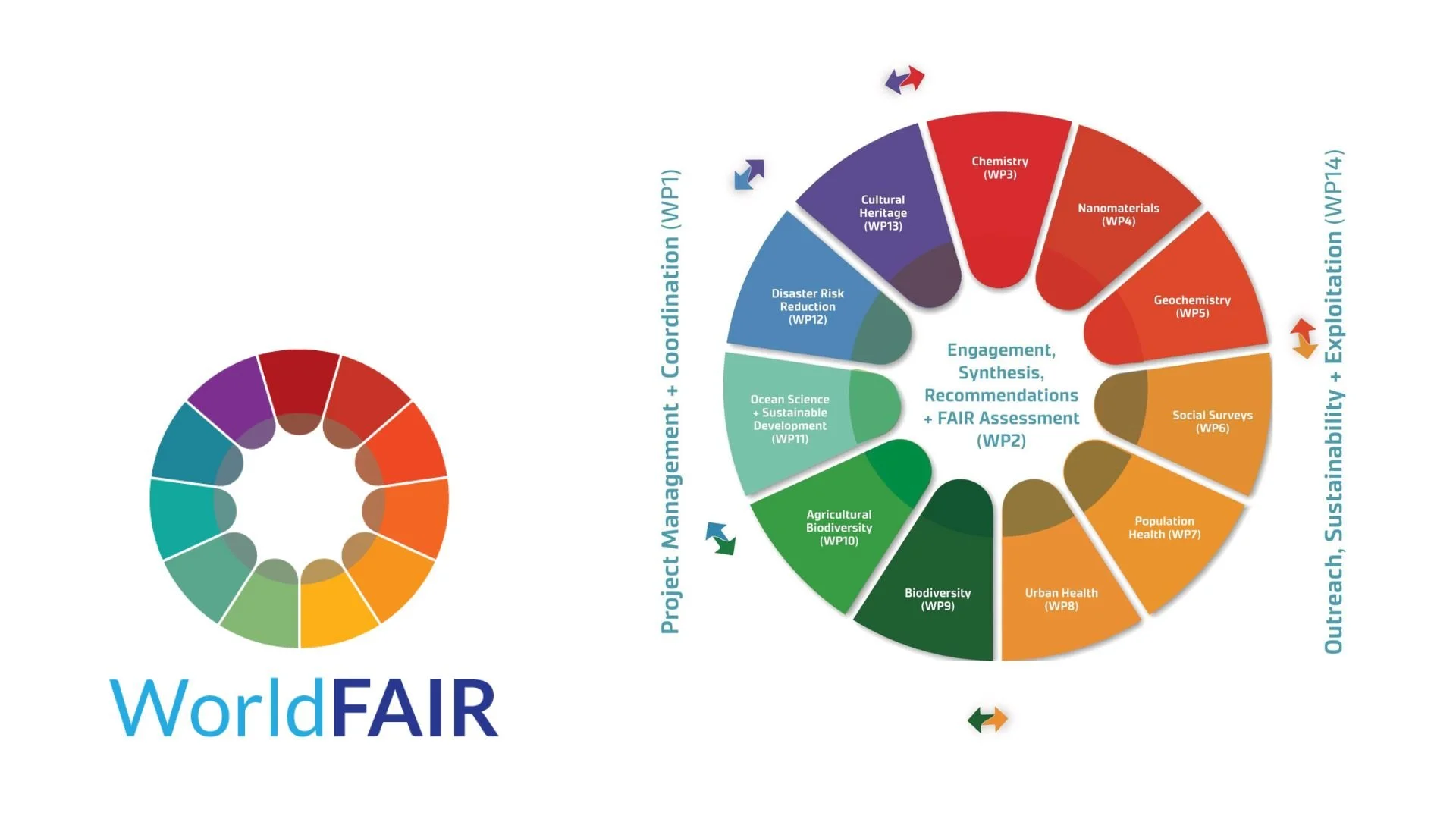
Global cooperation on FAIR data policy and practice. Image: AuScope
The WorldFAIR project evaluated global FAIR data policies and practices through a series of international case studies, with the aim of developing frameworks and recommendations to improve the accessibility, interoperability and reuse of research data.
Overview
WorldFAIR brought together leading organisations worldwide through collaboration between CODATA and the Research Data Alliance (RDA). The project implemented and tested FAIR principles across a range of disciplines using a series of case studies designed to benchmark current practices and identify opportunities for improvement.
AuScope led the geochemistry component of the program in collaboration with the OneGeochemistry global initiative. This work assessed existing data practices within geochemistry and contributed to the development of interoperable standards and guidance for FAIR data implementation.
Each case study conducted a lightweight benchmarking and information-gathering exercise by developing a FAIR implementation profile. This process mapped current best practices, emerging solutions and initiatives within the discipline, and explored opportunities to pilot interoperability standards and guidelines.
Findings from all case studies were synthesised to develop discipline-specific frameworks and recommendations for assessing and improving FAIR data practices across research communities.
The Challenge
Data practices across many research disciplines lacked consistent standards and interoperability, making it difficult to efficiently share, integrate and reuse data. This limited the potential for cross-disciplinary research and reduced the impact of valuable datasets.
The WorldFAIR project addressed this challenge by evaluating current practices and developing practical guidance, standards and frameworks to support the broader implementation of FAIR data principles.
Outcomes
Key outcomes of the Pilot Project include:
Development of FAIR implementation profiles across multiple research disciplines
Creation of interoperability standards and practical guidance for FAIR data implementation
Synthesis of case study findings into discipline-specific FAIR assessment frameworks
Delivery of recommendations to support improved global FAIR data practices within (and across) disciplines.
Foster alignment across the complex and heterogeneous geochemistry community using FAIR data practices
Findings and policy recommendations from the full project were outlined in WorldFAIR Final Policy Brief: Enabling Global FAIR Data - Recommendations for Research Infrastructures
AuScope researchers are continuing our collaboration with CODATA with WorldFAIR+
Who will benefit
Researchers, data managers, industry professionals and government agencies benefit from improved data sharing, greater interoperability and more consistent standards for research data management.
Project Name
WorldFAIR
Project Leads


Timeframe
2021 to 2023
Status
Complete
Funding
NCRIS Horizon2020
Collaborators
Codata, European Commission, One Geochemistry
AuScope Programs
International Collaborations