
EarthBank in the Classroom
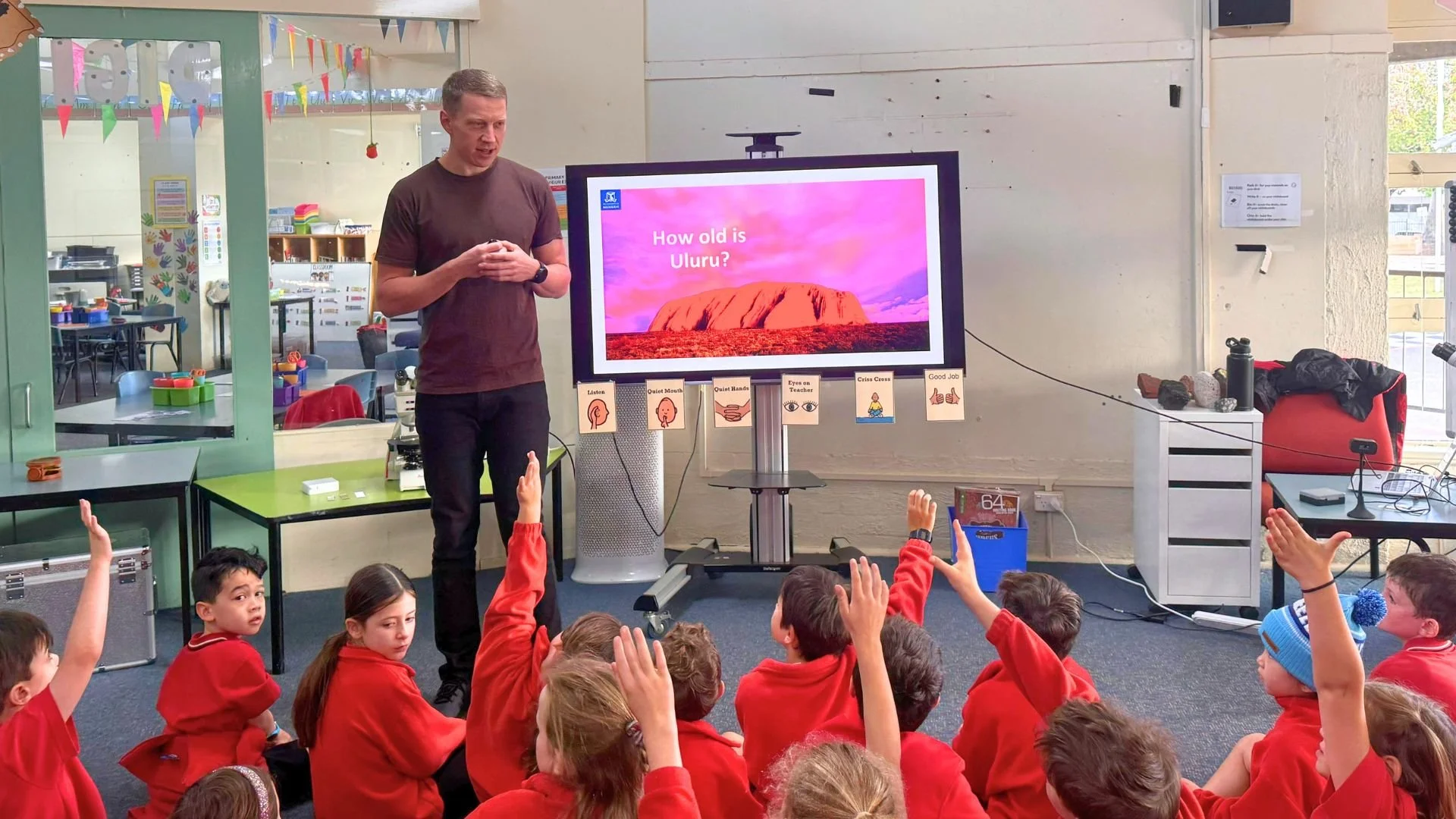
Dr Hayden Dalton in the classroom with year 1 and 2 students from Solway Primary School. Image: Supplied
The ‘EarthBank in the Classroom’ project will help fill an important gap when it comes to exposing young people to the many exciting aspects of geoscience, a discipline which is vital to the sustainable development of our planet.
Overview
Co-led by Hayden Dalton from the University of Melbourne (UoM) and Bryant Ware from Curtin University, this project will develop training modules and design lesson plans using the AuScope EarthBank platform (formerly AusGeochem) to modernise STEM teaching of Earth and environmental sciences at all levels of education.
At the university level, research process-style exercises will be developed that work within the timeframe of a laboratory class. The expectation is that a series of classes would culminate in a semester-long ‘project’ utilising data in EarthBank. The project will also leverage the platform's geospatial capabilities to develop a field-based teaching module, initially based in Broken Hill.
The Challenge
Geochemical data are central to understanding how the Earth formed, evolved, and interacts with its environment. They support the sustainable discovery and use of natural resources and help inform environmental and climate-related decision-making.
To translate this knowledge into insights about future climate and environmental risks, and to develop predictive geoscience capabilities for discovering new critical mineral resources, geoscience education needs to be modernised.
Expected Outcomes
Develop a geoscience activity that utilises the AuScope EarthBank platform and a desktop SEM to integrate into the Inspire STEM education program.
Develop a geoscience outreach activity that utilises the AuScope EarthBank platform.
Provide training to EarthBank fellows/outreach groups.
Generation of outreach activities at national and international meetings/conferences.
What are the benefits?
EarthBank in the Classroom will enable young students to interactively learn more about Earth’s evolution and composition, and its applications in sustainable resource management and environmental/climate policy.
EarthBank in the Classroom not only aims to engage students in Earth Sciences more effectively, but also serves as a precursor to galvanising subsequent Earth Science programs and the development of educational resources.
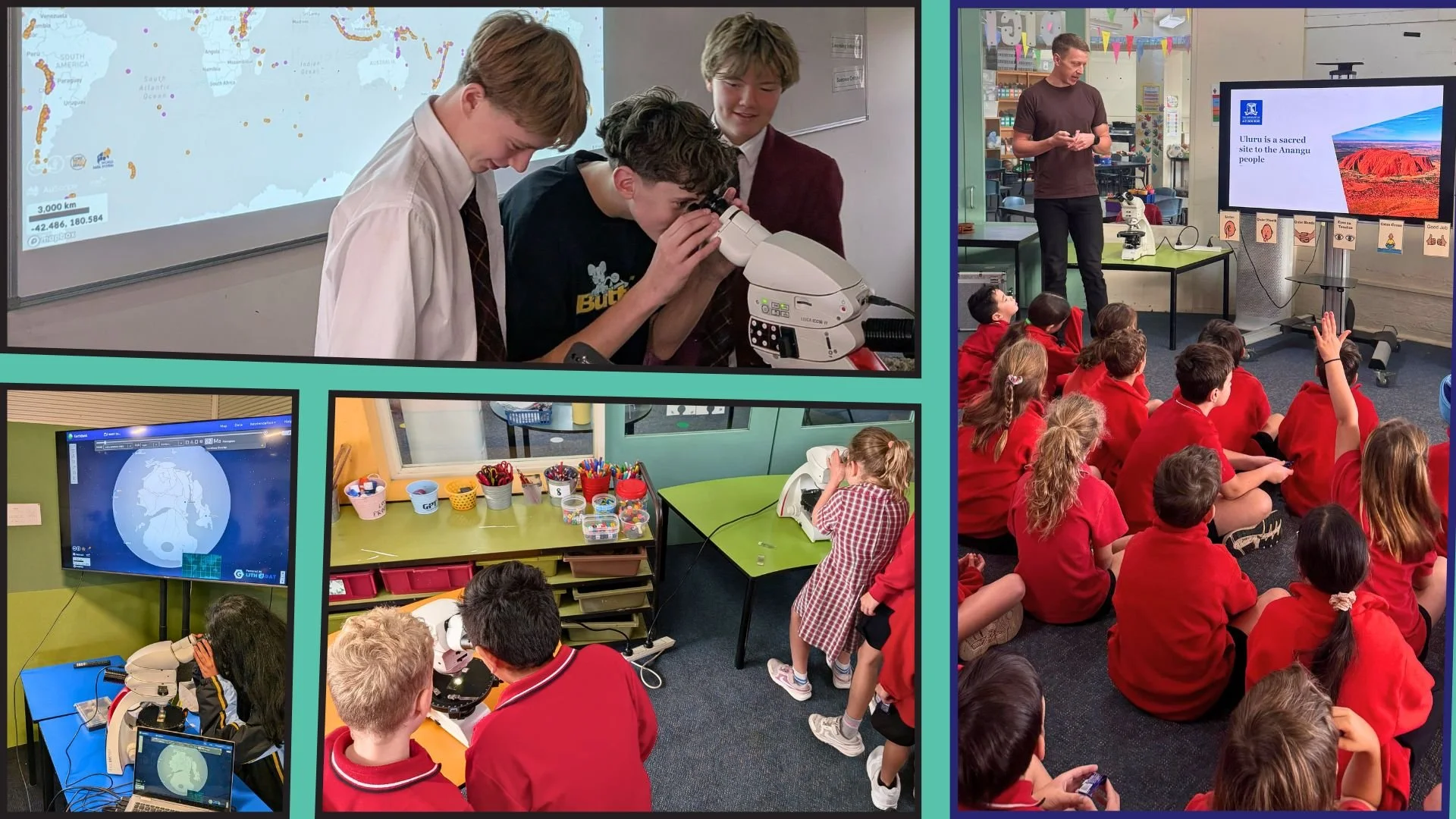
Interactive EarthBank workshops from 2026. Images: Supplied
Who will benefit?
The EarthBank in the Classroom program will benefit students, teachers and industry. Students and teachers will gain access to a comprehensive educational resource that enhances their understanding of Earth’s formation, composition and evolution. Additionally, the program will make Earth Science more accessible, potentially leading to a better perception of industry and its importance in economic and environmental sustainability.
Access
Teaching Modules: When available, learning modules/activities developed by this project will be openly accessible through a Creative Commons Licence CC-BY 4.0 (Attribution International).
EarthBank Data: Access to the infrastructure is currently available to anyone within the classroom setting. All data publicly accessible on EarthBank is made available through a Creative Commons Licence CC-BY 4.0 (Attribution International).
Project Name
EarthBank in the Classroom
Project Lead


Timeframe
2025 to 2027
Status
Active
Funding
AuScope Pilots 4
Host
University of Melbourne (UoM)
Curtin University
Partners
The University of Sydney (USyd)
AuScope Programs

Acknowledging AuScope & NCRIS
This project was made possible by support from the National Collaborative Research Infrastructure Strategy (NCRIS) via AuScope.
Acknowledging AuScope and NCRIS helps us demonstrate the value of shared research infrastructure, ensuring continued support and resources for the research community.
For examples of acknowledgment, please visit our ‘How to Acknowledge AuScope’.
We’d love to see your work—please tag us on social media using:
@auscope | #AuScopeImpact | #NCRISimpact